


An obscure Nigerian activist operating from a small tools shop in southeastern Nigeria has become an unlikely but influential figure in shaping a controversial international narrative about violence in Africa’s most populous nation — a narrative that has reached the highest levels of American politics and even informed military action.
According to the New York Time, Emeka Umeagbalasi, a short, soft-spoken man who sells screwdrivers and wrenches in a bustling market in Onitsha, Anambra State, is the founder of the International Society for Civil Liberties and the Rule of Law, known as Intersociety. Though little known outside advocacy circles, his research on religious violence in Nigeria has been repeatedly cited by U.S. Republican lawmakers, including Senator Ted Cruz of Texas and Representatives Riley Moore of Virginia and Chris Smith of New Jersey, to argue that Christians are being deliberately targeted for mass killings in Nigeria.
Read related news from New Daily Prime:
Further military strikes in Nigeria possible — Trump
Trump warns possible airstrikes on Iran
Trump imposes 25% tariffs on Nvidia, other chips over security concerns
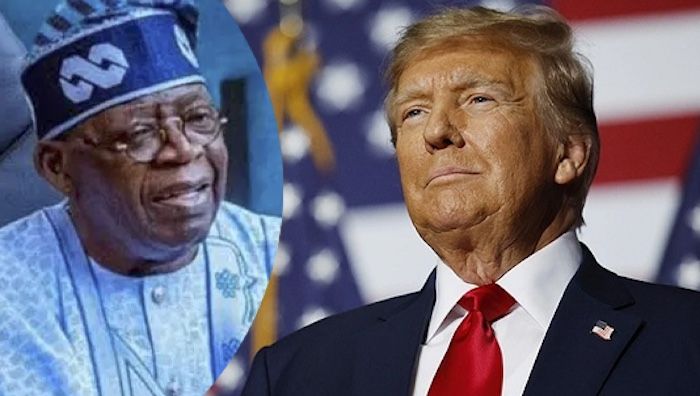
That narrative gained global significance when President Donald Trump cited the alleged persecution of Christians while ordering airstrikes in Nigeria on Christmas Day — strikes carried out hundreds of miles away from Umeagbalasi’s shop but rooted in claims he has promoted for years. To Umeagbalasi, the moment felt historic. He described the U.S. president’s action as “miraculous,” warning that without urgent intervention, “Nigeria will explode.”
Umeagbalasi claims that more than 125,000 Christians have been killed in Nigeria since 2009. However, in interviews with The New York Times, he acknowledged that he does not consistently verify his figures. He said his research relies largely on secondary sources such as Christian advocacy organisations, Nigerian media reports and internet searches, rather than firsthand investigations.
Collecting accurate data on violence in Nigeria is notoriously difficult. Many attacks occur in remote areas, go unreported for weeks or months, or lack reliable details about victims and perpetrators. The Nigerian government does not publish comprehensive statistics on violent deaths, nor does it disaggregate casualties by religion.
Independent researchers caution that while Christians have indeed been killed in large numbers, Muslims have also been heavily affected by the same insecurity. Armed Conflict Location and Event Data (ACLED), a respected conflict-monitoring group, estimates that about 6,700 people were killed in Nigeria during the first seven months of 2025, including insurgents and security forces. Roughly 3,000 were civilians, but the data does not identify victims’ religions.
Umeagbalasi’s methods have drawn sharp criticism. He admits that he rarely travels to Nigeria’s Middle Belt — the epicentre of farmer-herder clashes and communal violence — and often assumes the religion of victims based on where attacks occur. In one instance, he claimed that 25 schoolgirls abducted in Kebbi State were mostly Christian, despite confirmations from school officials and local authorities that all the girls were Muslim.
Many researchers also object to his portrayal of Fulani people as perpetrators of violence. Umeagbalasi has repeatedly described Fulani ethnic militias as responsible for attacks on Christians and has used language that critics say borders on ethnic hatred. The Fulani are a large and diverse ethnic group, numbering in the tens of millions across West Africa, most of whom are not involved in violence.
Nnamdi Obasi, Nigeria adviser to the International Crisis Group, described Intersociety’s methodology as deeply flawed, saying its figures often fail basic arithmetic consistency. “The basic addition is very, very faulty,” he said.
Prominent Nigerian clerics have also pushed back against the framing of the crisis as a purely religious one. Bishop Matthew Hassan Kukah of Sokoto, whose state was among those targeted in the U.S. airstrikes, warned that excessive focus on religious identity obscures Nigeria’s deeper problem — a weak state unable to protect its citizens.
“The issue is not who is Christian or Muslim,” Kukah said. “The issue is that the state lacks the capacity to secure lives.”
Despite criticism, Umeagbalasi continues to publish reports warning that Nigeria is approaching a point of no return. He claims that nearly 20,000 churches have been destroyed over 16 years and estimates that Nigeria has 100,000 churches — a figure he later admitted was obtained through an online search rather than official data.
Sitting in his living room surrounded by plaques and unfinished reports, Umeagbalasi described his work as a “heavenly marathon.” For critics, however, his influence underscores a troubling reality: in a global information ecosystem hungry for simple explanations, unverified data — when amplified by powerful political actors — can shape policy, public opinion and even war.
For more details, visit www.newdailyprime.news

