


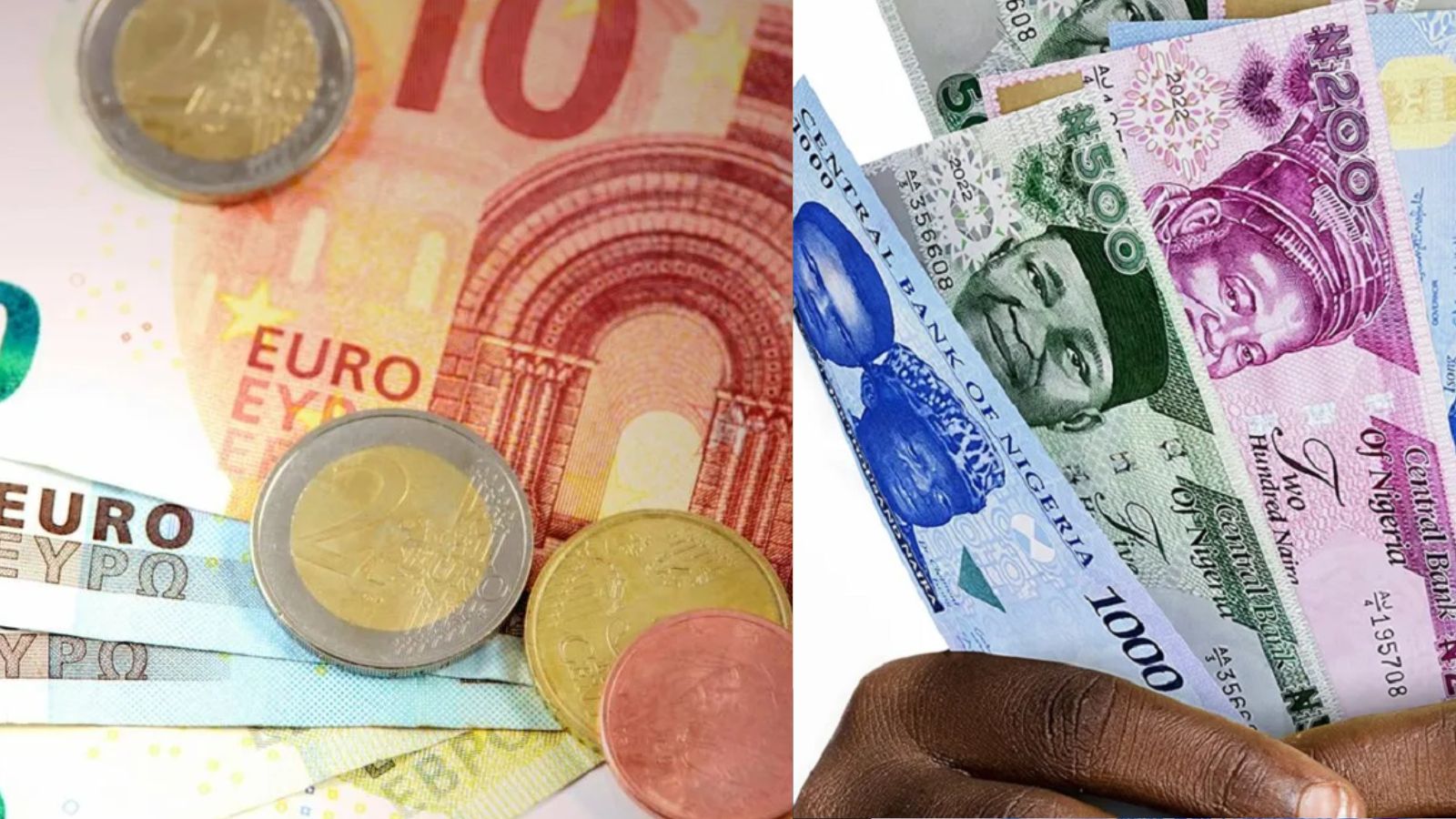
The naira’s performance against the euro on Saturday, 17 January, 2026 reflected a cautious equilibrium across Nigeria’s foreign exchange markets, with contrasting signals from the official and parallel segments.
According to data published by the NGNToday platform, the official exchange rate for the euro closed at N1,649, unchanged from N1,649 recorded on Friday, 16 January.
Although the figure remained flat, analysts describe the movement as a sign of underlying weakness, as the naira failed to post any recovery amid ongoing demand pressures for the European currency.
At the black market, the euro also traded steadily at N1,705, maintaining the same rate as the previous day.
This stability suggests a temporary balance between demand and supply in the parallel segment, following recent volatility seen earlier in the month.
Market observers note that the euro’s performance differs from that of the dollar and pound, largely due to lower transaction volumes and more selective demand.
The absence of movement in the black market indicates that traders may be adopting a wait-and-see approach, especially as businesses reassess import needs and foreign payment obligations.
In the official market, the lack of appreciation points to constrained foreign exchange inflows and limited room for price adjustment under the current managed framework. While the Central Bank’s oversight continues to dampen sharp fluctuations, it also means that subtle pressures are often reflected through stagnation rather than visible rate changes.
The spread between the official and black market rates remains notable, reinforcing the structural divide between both markets. Analysts argue that sustained convergence will depend on improved euro liquidity, increased export earnings, and broader investor confidence.
For More Details, Visit New Daily Prime at www.newdailyprime.news

