


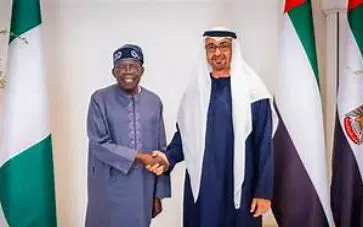
In a world where economic volatility hits hard, the naira has been on a rollercoaster – dipping to record lows against the pound and dollar amid inflation woes and forex shortages. But stronger ties with the United Arab Emirates (UAE) offer a lifeline, potentially easing these pains through boosted remittances, smart investments, and trade pacts. For Nigerians at home or in the UK diaspora – over 270,000 strong – this could mean steadier finances, better exchange rates, and fresh business avenues. As global partners like the UAE deepen links with Africa, Nigeria stands to gain if leaders like President Bola Tinubu capitalise on them.
Read related news from New Daily Prime: UAE congratulates Nigeria on 65th independence anniversary, pledges stronger partnership
The UAE is already a remittance powerhouse for Nigeria, sending home over $1.5 billion annually from its 200,000+ Nigerian expats. Formalising these flows through bilateral deals – like fintech collaborations between UAE banks and Nigerian platforms such as Opay or Moniepoint – could slash transfer fees and stabilise the naira. Imagine real-time apps offering rates closer to mid-market (around ₦1,914 to £1 as of early 2026), bypassing black market rip-offs. This injects more forex into Nigeria’s reserves, curbing volatility triggered by oil price swings or global events.
For UK Nigerians, the perks are tangible. Many in Liverpool, Manchester, or London send money from NHS or finance jobs, but high costs eat into earnings. UAE hubs could bridge this with tri-nation agreements: send pounds via UAE-linked services like Al Ansari, converting to naira at favourable rates. Lower fees (potentially under 2 per cent) mean more cash for families back home, easing pressures from 34 per cent inflation. Plus, UAE’s digital dirham could pair with e-Naira for seamless, low-cost swaps, as piloted in recent CBN trials.
Investments are another game-changer. The UAE’s $30 billion Africa fund targets energy and infrastructure; Nigeria could snag slices for projects like Lagos solar grids or Abuja tech parks. This diversifies from oil (Brent at $78 a barrel), strengthening the naira long-term by attracting foreign direct investment (FDI). UAE firms like Masdar already eye Nigerian renewables – partnerships could create 50,000 jobs in green sectors, boosting exports and reserves.
Trade opportunities abound too. Dubai’s free zones host thousands of Nigerian businesses; enhanced ties might waive duties on goods like UK-sourced tech imported via UAE to Nigeria. For diaspora entrepreneurs, this means easier setups: register in Dubai, tap Nigerian markets, and remit profits efficiently. Liverpool’s Nigerian community, with strong shipping links, could pioneer logistics ventures – faster cargo from UAE ports cutting costs amid naira pains.
To make it work, Nigeria must prioritise anti-corruption and ease-of-business reforms.
For more details, vsist www.newdailyprime.news

