


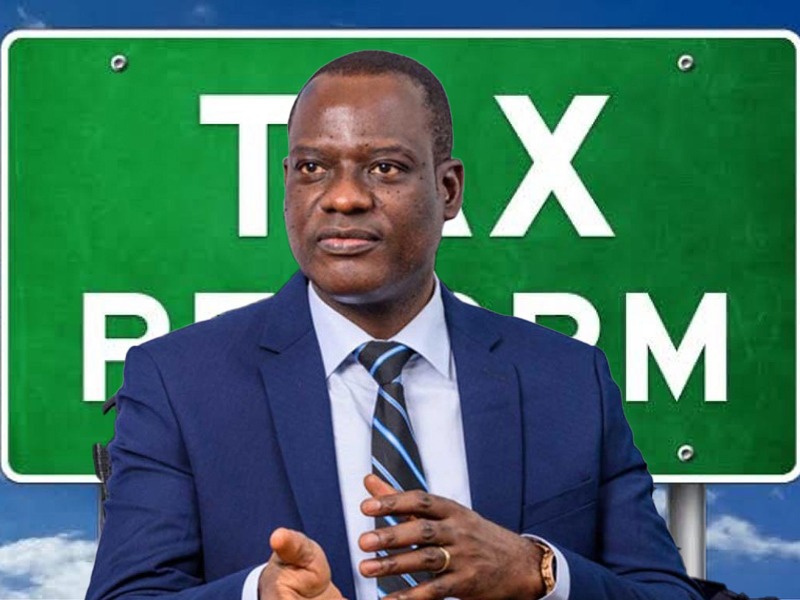
The Chairman of the Presidential Fiscal Policy and Tax Reforms Committee, Taiwo Oyedele, has defended Nigeria’s newly gazetted tax laws, insisting that concerns raised by KPMG Nigeria stem largely from misunderstandings of policy intent or disagreement with deliberate reform choices rather than actual errors.
In a statement issued on Saturday, Oyedele said the committee welcomed scrutiny and feedback but maintained that the majority of KPMG’s observations mischaracterised the objectives and structure of the new tax framework.
“We welcome all perspectives that contribute to a shared understanding and successful implementation of the new tax laws,” the statement said. Oyedele acknowledged that some points raised by KPMG were useful, particularly those relating to implementation risks, clerical matters and cross-referencing issues. However, he stressed that most of the report reflected “a misunderstanding of the policy intent, a mischaracterisation of deliberate policy choices, and, in several instances, repetitions and presentation of opinion and preferences as facts”.
According to the committee, several issues labelled by KPMG as “errors”, “gaps” or “omissions” were either incorrect conclusions, taken out of context, or areas where the firm preferred alternative outcomes to those consciously adopted by policymakers.
“While it is legitimate to disagree with policy direction, disagreements should not be framed as errors or gaps,” the statement said.
Addressing concerns over the taxation of shares and the stock market, Oyedele explained that the framework is structured on a graduated basis from zero to a maximum of 30 per cent, which is expected to reduce to 25 per cent. He added that 99 per cent of investors would qualify for unconditional exemption. Fears of a market sell-off were dismissed, with the committee noting that disposals in December 2025 would benefit from reinvestment exemptions or enhanced deductions under the new law.
On the commencement date of the tax laws, Oyedele said strict alignment with accounting periods overlooked the complexity of transitioning to a wholesale tax reform, which affects audits, deductions, credits and penalties across multiple periods.
The committee also defended provisions on indirect transfers of shares, describing them as aligned with global best practices and the Base Erosion and Profit Shifting (BEPS) initiative, aimed at closing loopholes long exploited by multinationals.
Clarifying other areas, the statement said insurance premiums are not subject to Value Added Tax, as insurance does not constitute a taxable supply under the Nigeria Tax Act. It added that the statutory definition of “community” applies throughout the law unless context dictates otherwise, and that the use of the word “includes” makes the list of taxable persons non-exhaustive.
On dividend taxation, Oyedele said dividends from foreign companies cannot be franked because no Nigerian withholding tax is deducted, stressing that the differential treatment of Nigerian and foreign dividends is a deliberate policy choice.
The committee further clarified that non-residents are still required to register for tax purposes, even where income is subject to final withholding tax, as returns serve broader compliance objectives.
Other issues addressed included restrictions on foreign exchange deductions at parallel market rates, VAT-linked deductibility rules as anti-avoidance measures, and the expiry of the Police Trust Fund in June 2025, making calls for its repeal unnecessary.
Oyedele said minor clerical inconsistencies were already being identified and would be resolved through administrative guidance. He urged stakeholders to move from “static critique to dynamic

