


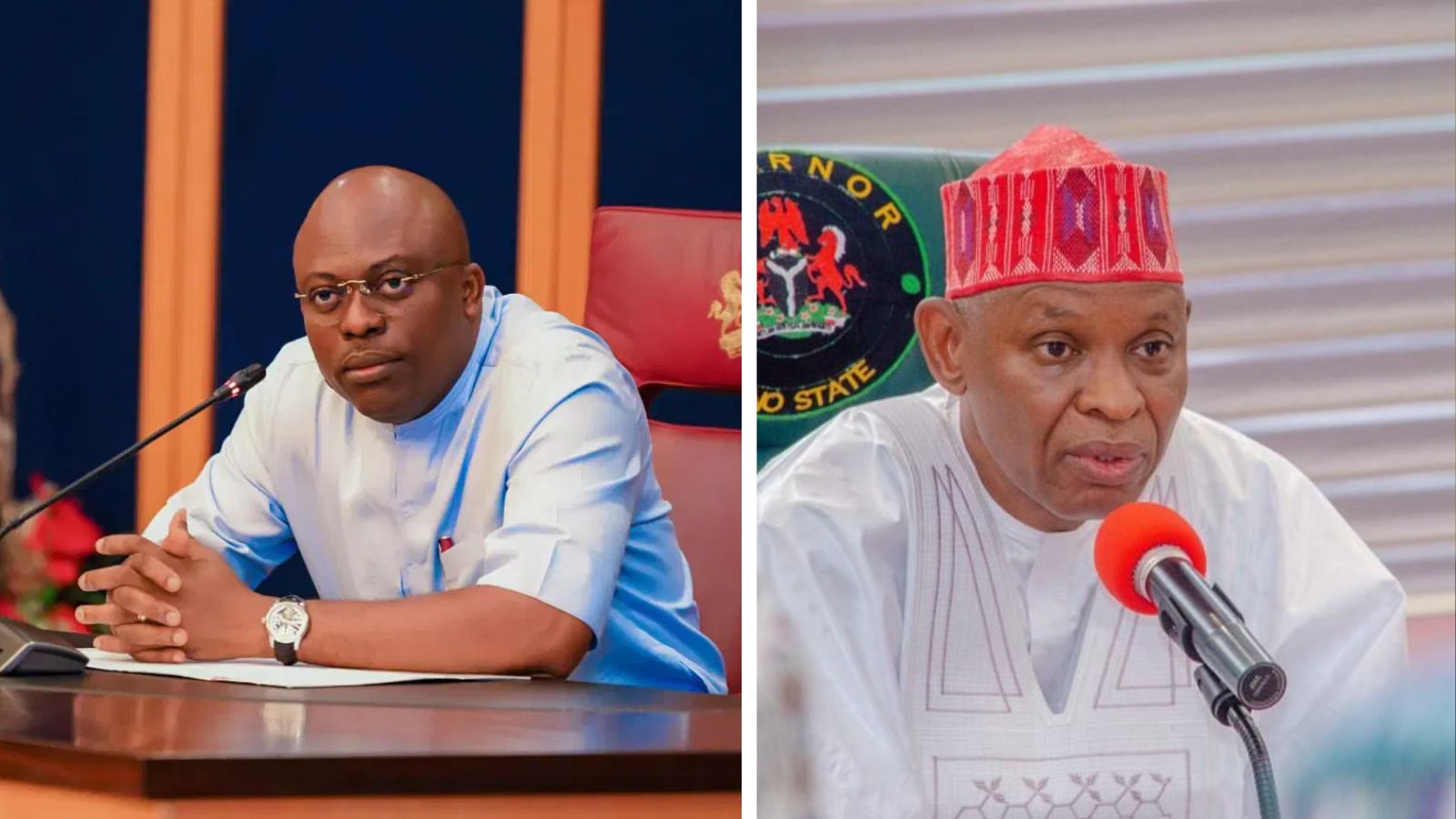
Political analyst/ commentator, Kayode Adebiyi, has offered a comparative assessment of the political trajectories of Rivers State Governor, Siminalayi Fubara, and his Kano State counterpart, Abba Kabir Yusuf, arguing that their experiences reflect a familiar reality in Nigerian politics: political independence is not proclaimed, but carefully achieved.
In a widely shared Facebook analysis, Adebiyi examined Nigeria’s long-standing godfather political model, an arrangement built on loyalty, control and dominance of political structures. Under this system, governors rarely emerge solely through popular mandate; rather, they are products of powerful political patrons who shape the environment in which they govern.
The analyst noted that the godfather system is not new in Nigeria. Over the years, political godfathers have influenced the selection of candidates for state houses of assembly, determined the emergence of Speakers, and ensured loyalists control local government councils. As a result, many governors do not assume office with full independence, but instead inherit political structures designed and controlled by others.
Governor Fubara rose to office under the influence of former Rivers State governor, Nyesom Wike, while Governor Yusuf was brought to power by Kano political heavyweight and former governor, Rabiu Kwankwaso. Both godfathers are known for enforcing a winner-takes-all approach to political control in their respective states.
According to Adebiyi, the key difference between the two governors lies not in how they came to power, but in how they managed the political realities they inherited.
Read related story from New Daily Prime:
Wike vows to resist ;political burial; ahead of 2027 Rivers gubernatorial election
Wike fires back at Fubara over ‘barking dog’ remark as rift deepens in Rivers politics
Rivers APC inherited PDP crisis amid Fubara-Wike feud
Governor Yusuf, the analyst argued, adopted a cautious and strategic approach early in his administration. Aware of internal instability within his party, the New Nigeria Peoples Party, and the potential threat this posed to his political future, Yusuf reportedly focused on quietly consolidating power. He engaged directly with members of the Kano State House of Assembly, making it clear that their political fortunes were closely linked to his own.
More significantly, Yusuf released full federal allocations to local government councils without deductions, a move widely regarded as rare in Nigerian governance. This decision shifted financial and political influence to the grassroots, giving local government chairmen direct control over funds due to them. Analysts believe this fiscal autonomy helped foster loyalty based on mutual political interest rather than coercion.
Yusuf also consolidated elite support within the state. Even the Speaker of the Kano State House of Assembly, who is reportedly related to Kwankwaso, eventually aligned politically with the governor. By the time Yusuf’s relationship with his godfather visibly deteriorated, he had already secured the support of lawmakers, cabinet members and grassroots officials. His subsequent political moves, including realignment efforts towards the APC, appeared to be the final stage of a long-term strategy.
In Rivers State, however, developments followed a different path.
Adebiyi observed that Governor Fubara entered open confrontation with the Rivers State House of Assembly barely six months into office. The Assembly, still largely loyal to Wike, became the focal point of the political crisis. In godfather politics, confronting an institution still controlled by a political patron is often counterproductive.
The crisis escalated rapidly, with the demolition of the Assembly complex becoming a defining symbol of political breakdown in the state. Unlike his Kano counterpart, Fubara did not succeed in securing the loyalty of local government chairmen through fiscal empowerment, leaving him with a narrow institutional base.
Support for the Rivers governor, according to Adebiyi, has largely come from non-state actors, including former office holders, political veterans and activists who do not currently control key political institutions. In Nigeria’s power structure, influence is typically exercised through offices, budgets and institutional control rather than public sentiment.
Although presidential intervention and the declaration of a temporary state of emergency halted impeachment proceedings against the governor, Adebiyi argued that the opportunity to rebuild political bridges was missed. Instead, the state returned to renewed confrontation, with Wike retaining firm control of the political structure and the governor increasingly isolated within the system.
“The contrast between Kano and Rivers is not about courage or morality,” Adebiyi concluded. “It is about method.” While Yusuf consolidated loyalty before asserting independence, Fubara asserted independence before securing loyalty.
What Next for Rivers State?
It is unfortunate that the people of Rivers State continue to bear the cost of prolonged political conflict among their leaders. Development can only thrive in an atmosphere of peace and stability, yet for more than two years the state has remained politically unsettled.
As the chief executive of the state, Governor Siminalayi Fubara carries significant responsibility for restoring stability. Leadership at this level demands restraint, political wisdom and the ability to manage diverse interests, rather than sustained confrontation. The experience of earlier events, particularly those that culminated in the declaration of a state of emergency, should have offered important lessons.
Governor Fubara does not require external political interpretation to understand the political instincts of President Bola Ahmed Tinubu. The President is widely regarded as a politician who values loyalty and political structure. It is therefore unlikely that he would abandon a long-standing ally for a governor who has struggled to stabilise his political environment. Expecting such a shift would be unrealistic.
Furthermore, abandoning a key political ally under these circumstances could send a troubling message nationwide, that political godfathers can be disregarded after facilitating electoral success. Such a precedent risks weakening political trust and deepening instability across the country.
For more details, visit www.newdailyprime.news
