


By Clement Abayomi
Imagine if Nigerian roads could speak. They would probably narrate their own hustle and the everyday battle with potholes. And, perhaps, in a moment of self-appreciation, they might tell themselves, “Na me dey carry all these Toyota and Honda for head!” Besides, for Nigerians, cars are not just metal boxes with engines; they are considered partners in survival.
This is perhaps why a Nigerian’s choice of car comes with absolute care. In Nigeria, where “tear rubber” dreams usually meet the reality of “Tokunbo” budgets, one can point to five car models that have gained popularity. These cars top others because of their affordability, reliability, and of course the ability to survive Nigerian condition.
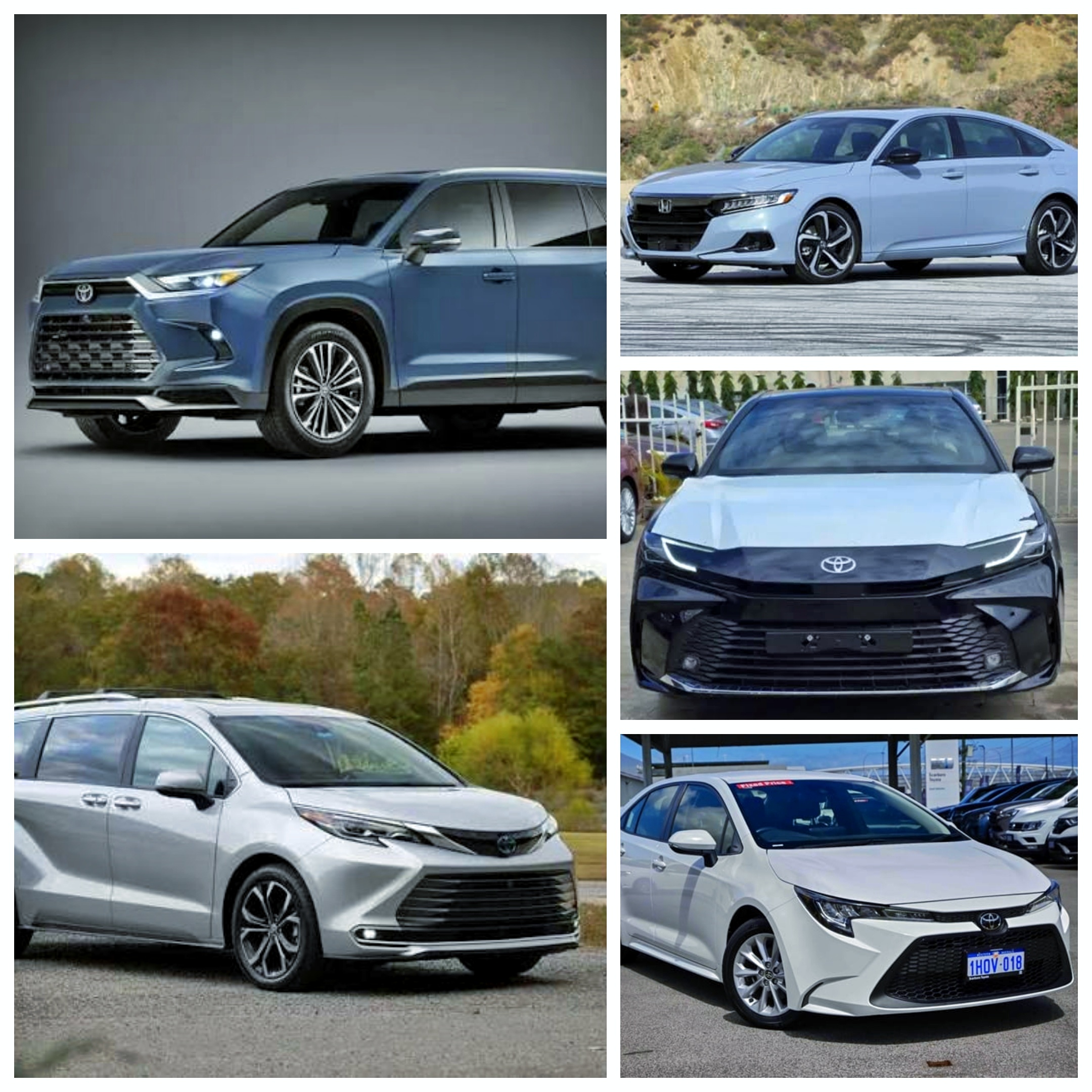
This report presents the top five cars most common in Nigeria, exploring why they are common, what makes them people’s choice, and even how they have come to symbolise more than mere mobility.
First of all, to appreciate the popularity of certain car models in Nigeria, one must understand the peculiarities of the Nigerian automotive market. The market is defined by a particular set of factors: affordability, fuel efficiency, ease of maintenance, and, essentially, the availability of spare parts.
The harsh realities of Nigerian roads, coupled with fluctuating economic conditions and rising fuel costs, mean that the average Nigerian car buyer is a sophisticated pragmatist, who must certainly be strategic in synegising (his) aspiration and common sense.
Japanese brands, specifically Toyota and Honda, have achieved near-hegemonic dominance, owing to their renowned durability and the ready availability of replacement parts. According to Carlots.ng, the presence of ride-hailing services, the demands of inter-state travel, and an increasing middle class have further made these brands most used. Meanwhile, luxury and status remain important, especially in urban centres. This actually influences the demand for premium models like Lexus and Mercedes-Benz.
The Top Five Cars Common in Nigeria:
1. Toyota Corolla
If there were ever a car that could be called the “national vehicle” of Nigeria, the Toyota Corolla would claim the title. Toyota Corolla has been described as “Nigeria’s undisputed king of the roads” by Carlots.ng. This Toyota model is praised for its reliability, affordability, and hassle-free ownership. Its dominance is not accidental. Findings showed that used models start at approximately N2 million, making it accessible to a wide spectrum of buyers, from first-time car owners to ride-hailing operators.
A very important element of its popularity is its fuel efficiency and robust engineering. These are features that make it ideal for traversing Nigeria’s challenging road conditions. Also, its spare parts are everywhere, and virtually every roadside mechanic is proficient in its repair. As reported by Carlots.ng, the Corolla’s minimal running costs and longevity ensure that it retains strong resale value, making it a favourite among both individual buyers and commercial fleet operators.
Moreover, the Corolla’s compact but spacious design makes it suitable for both city commuting and longer journeys. Mechanic On The Go reveals that the Corolla’s ability to economise fuel, reduce maintenance costs, and provide relative spaciousness enhance its appeal, particularly for families and young professionals. Maintenance, according to Mechanic On The Go, is straightforward: regular tire pressure checks and wheel alignment are often all that is required to keep it running smoothly.
2. Toyota Camry
Running neck-and-neck with the Corolla in popularity is the Toyota Camry. This is a model that has earned the nickname “muscle” in Nigerian parlance. The Camry finds a balance between usability and comfort. Its price spectrum, from N3 million for earlier models to N25 million for later ones, serves a wide audience including private owners, corporate executives, and transport operators.
Toyota Camry is especially liked for its comfort and strong resale value. It is often the go-to choice for families and professionals seeking a car that can withstand the rigours of daily commuting without compromising on comfort. Mechanic On The Go notes that regular servicing and the use of quality engine oil are essential to extend the Camry’s lifespan.
Toyota’s reputation for long-lasting vehicles is bolstered by the Camry’s performance on Nigerian roads. Leadership.ng reports that Toyota’s “healthy” engines, low maintenance costs, and long lifespan have made models like the Camry the first choice for private and business users.
The ready availability of spare parts and the familiarity Nigerian mechanics have with Toyota vehicles further emphasise the Camry’s popularity.
3. Honda Accord
Honda Accord occupies a special place when we talk of common cars in Nigeria. This model has been tagged “End of Discussion”, signalling that its value is not debatable. As Leadership.ng reveals, Honda Accord is favoured by young professionals and upwardly mobile individuals. Carlots.ng maintains that its appeal lies in a combination of stylish design, reliable performance, and comfort, with a price range stretching from N1.4 million for older models to N60 million for the latest offerings.
The Accord’s sporty handling and advanced tech features set it apart from its rivals. As Carlots.ng explains, costs can be marginally higher for Toyota models, but its durability and availability of spare parts have ensured its continued popularity.
Also, Leadership.ng notes that Honda cars, including the Accord, require little maintenance and are commended for their durability, with engines that “can run for years without proper maintenance.” The Accord is also a common sight in both the new and used car markets, ensuring it remains accessible to many.
Mechanic On The Go emphasises the importance of regular oil changes and monitoring transmission fluid levels to keep the Accord running efficiently. The car’s reputation for value ensures that it remains a top choice for both daily commuting and business use.
4. Toyota Sienna
Toyota Sienna, for Nigerians with large families or commercial transport needs, is the undisputed leader among minivans. The model is priced between N5 million and N20 million, and its spaciousness and versatility make it a favourite for both private and commercial use, as reported by Carlots.ng. Its structure allows it to withstand the rigours of Nigerian roads, while its ample interior space accommodates large families, luggage, or passengers with ease.
Also, the Sienna’s durability and low running costs have made it the top choice for transport services, including airport shuttles and inter-city travel. The abundance of spare parts and ease of maintenance further endears it to owners who depend on their vehicles for daily income. According to Mechanic On The Go’s routine maintenance, such as regular brake checks, is particularly relevant for the Sienna, given its frequent use in high-mileage, high-stress situations.
5. Toyota Highlander
Completing the top five of Nigeria’s most common cars is the Toyota Highlander, a mid-size SUV that is durable, comfortable, and versatile. In a report by Carlots.ng, it has prices ranging from N8 million to N30 million, and it appeals to families, professionals, and individuals seeking a stylish yet rugged vehicle. Its interior is spacious, and it is reputable for reliability. This makes it well-suited for both urban commutes and long-distance journeys across Nigerian roads.
Again, the Highlander is commended for fuel efficiency. This is one feature that is highly valued in Nigeria where fuel prices are a perennial concern. Its system of “shock absorber” and ground clearance are tailored for the challenges of Nigerian roads. The Highlander’s popularity is further boosted by availability of its spare parts, ensuring that owners can enjoy a premium driving experience without the financial burden typically associated with luxury SUVs.
Mechanic On The Go recommends routine cooling system and brake inspections to maintain the Highlander’s performance. This brings to the fore the model’s reputation for low maintenance and long-term durability.
The continued dominance of these five car models simply shows us the trends in the Nigerian car market. The economic system, inflation, and rising fuel prices have influenced the demand for vehicles that can withstand heavy use with minimal financial burden. However, in future, we may see increased competition from newer car models such as Hyundai and Kia, especially as users seek alternatives that give similar reliability at lower price points. Moreover, the rise of electric and hybrid vehicles, though just coming into existence in Nigeria, may also influence preferences in the years to come, looking at the way global trends and environmental considerations begin to influence local tastes.
Of course, the Nigerian automotive market is evolving, but the models presented in this article are likely to retain their pre-eminence, even as new contenders and technologies emerge. This is because, they have for years been trusted companions of countless journeys and “witnesses” to the odds that define Nigerian roads.
For More Details, Visit New Daily Prime at www.newdailyprime.news

