


By Sakariyah, Ridwanullah
Public debate in Nigeria has intensified over the earnings, privileges, and wealth of public office holders amid rising food prices, a weakened naira, and renewed calls for fiscal restraint.
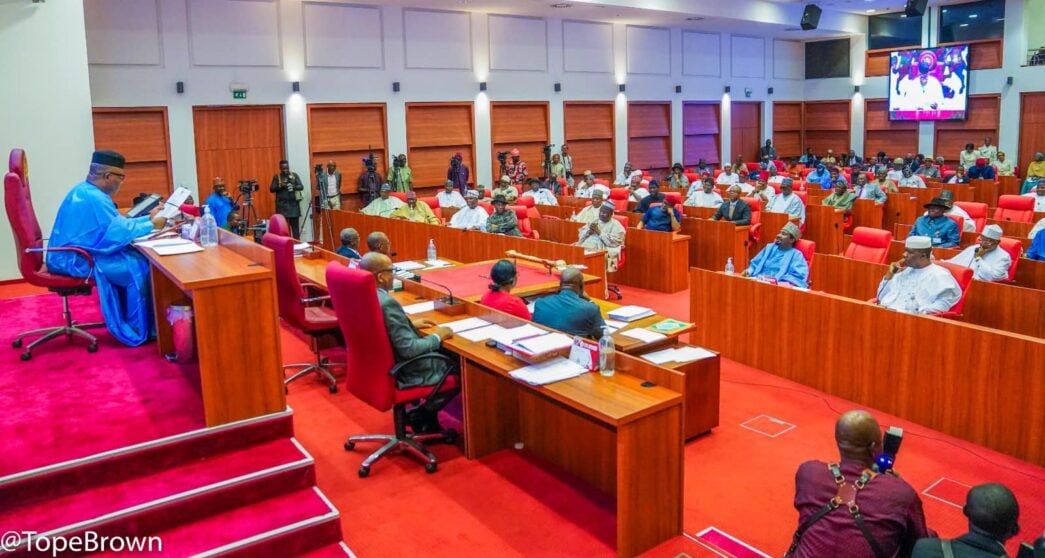
At the centre of this debate is the Nigerian Senate, a powerful institution constitutionally mandated to approve budgets, scrutinise public spending, and shape national economic policy.
Still, while the Senate plays a critical role in determining how public funds are allocated, the personal wealth of its members remains largely shielded from public view. What, then, is the net worth of an average Nigerian senator, and what does it reveal about accountability in a democracy under strain?
Officially, Nigerian senators are not among the highest paid lawmakers globally when measured strictly by statutory remuneration. According to documents of the Revenue Mobilisation Allocation and Fiscal Commission (RMAFC), the body legally empowered to fix salaries and allowances for public office holders, a senator’s basic monthly salary stands at ₦168,866.70.
However, salary alone does not reflect total official earnings. RMAFC records, which have been widely cited by Premium Times, The Punch, and other national newspapers, show that when regular allowances are included, a senator earns a combined monthly salary and regular allowances totalling N1,063,860.
This includes allowances for motor vehicle fuelling and maintenance (N126,650), domestic staff (N126,650), personal assistant services (N42,216.66), entertainment (N50,660), utilities (N50,660), newspapers and periodicals (N25,330), wardrobe (N42,216.66), house maintenance (N8,443.33), and a constituency allowance of N422,166.66. Of these, the constituency allowance constitutes the largest single component.
Apart from monthly payments, RMAFC distinguishes non-regular allowances, which are paid either once during a legislative term or at the end of service. These include a furniture allowance of N6,079,200 paid at the beginning of a four-year term, and a severance gratuity of the same amount payable at the end of tenure. Senators are also entitled to a vehicle allowance of N8,105,600, structured as a loan to be repaid before leaving office. This detail, as may be overlooked in public debates, is clearly stated in the commission’s framework.
Interestingly enough, there is another major source of controversy that lies outside RMAFC’s mandate – the Constitution. Nigerian law, specifically the Certain Political, Public and Judicial Office Holders (Salaries and Allowances, etc.) (Amendment) Act, 2008, does not expressly cover “running costs.”
These are funds allocated to lawmakers for constituency activities, staff salaries, and operational expenses. Responsibility for determining and administering these costs lies with the National Assembly Service Commission.
Over the years, the National Assembly has not published comprehensive figures for running costs, fuelling accusations of opacity. In August 2024, Senator Kawu Sumaila, representing Kano South, disclosed during a BBC Hausa interview, reported by Premium Times, that each senator receives about N21 million monthly as running cost, in addition to statutory salary and allowances. Similar disclosures were made in 2018 by former senator Shehu Sani, who stated that senators then received about N13.5 million monthly for the same purpose.
While the RMAFC has always maintained that running costs fall outside the scope of the remuneration (Amendment) Act, 2008, and that they are not determined or regulated by the commission.
In a statement signed by its chairman, Mohammed Shehu, RMAFC explained that only the National Assembly Service Commission has authority over these expenditures and can provide authoritative details on them.
But beyond their earnings, questions about senators’ wealth are complicated by Nigeria’s asset declaration regime. The Constitution requires all public officers to declare their assets to the Code of Conduct Bureau before assuming office and after leaving it.
However, these declarations are not accessible to the public. Civil society groups, including the Socio-Economic Rights and Accountability Project (SERAP), have always argued that this secrecy undermines accountability and public confidence.
Investigative reports by Premium Times, Vanguard, and Sahara Reporters have shown that some serving and former senators openly acknowledge owning multiple properties or businesses in Nigeria and abroad.
However, exact asset valuations are rarely disclosed, and there seems to be no publicly available database that allows citizens to independently verify the net worth of individual lawmakers. As a result, determining the net worth of an “average” Nigerian senator with precision may not be possible using publicly verifiable data.
What can be stated with certainty is that many senators come into office with substantial pre-existing wealth. Profiles published by BusinessDay and ThisDay indicate that Nigeria’s legislature is dominated by former governors, senior lawyers, career politicians, industrialists, and long-established business figures. Supporters of the Senate argue that wealth acquired before politics should not be conflated with corruption.
In a 2024 interview with ThisDay, Senator Yemi Adaramodu stated that legislative allowances are intended to support lawmakers’ official and constituency duties, rather than serve as personal enrichment.
And in the end, the question of the average Nigerian senator’s net worth cannot be answered with a definitive figure. What is clear, based on official documents and credible reporting, is that while statutory pay is publicly known, significant aspects of lawmakers’ income and assets remain shielded from scrutiny.
In a democracy facing economic strain, that opacity continues to test the fragile bond between elected representatives and the citizens they serve.
For More Details, Visit New Daily Prime at www.newdailyprime.news

