


The presidents of France and Germany have issued sharp warnings over US foreign policy under Donald Trump, saying Washington is undermining international rules and pushing the world towards a lawless global order.
In unusually blunt and apparently uncoordinated remarks, Emmanuel Macron and Frank-Walter Steinmeier said the postwar rules-based system was at risk of collapse.
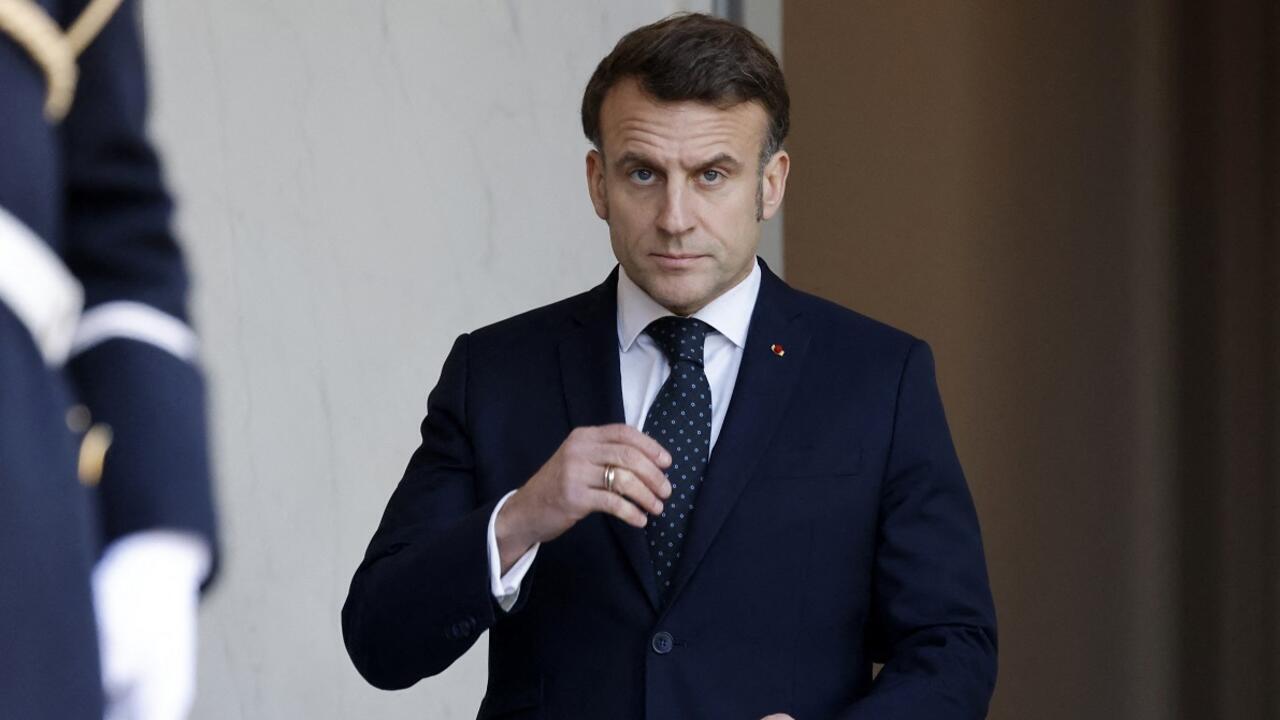
Speaking to France’s diplomatic corps at the Élysée Palace on Thursday, Macron said the United States was increasingly distancing itself from allies and abandoning the principles it once promoted.
“The US is an established power, but one that is gradually turning away from some of its allies and breaking free from the international rules that it was until recently promoting,” he said.
Macron warned that multilateral institutions were becoming less effective and that global politics was reverting to a struggle between major powers.
“We are living in a world of great powers, with a real temptation to divide up the world,” he said.
The French president said France rejected “new colonialism and new imperialism”, as well as “vassalage and defeatism”, and argued for greater European strategic autonomy.
“What we have achieved for France and in Europe is a step in the right direction,” Macron said. “Greater strategic autonomy, less dependence on the US and China.”
The remarks come as EU leaders struggle to balance the defence of international law with the need to maintain close ties with the US, a key economic partner and military ally, particularly in relation to Ukraine.
Neither Macron nor Steinmeier explicitly referred to recent US actions, but their comments were widely seen as a response to Washington’s raid on Caracas and the capture of Venezuela’s president, Nicolás Maduro, as well as Trump’s repeated statements about taking control of Greenland.
The EU’s foreign policy chief, Kaja Kallas, said on Thursday that the bloc was considering its response should US plans to acquire Greenland progress.
“The messages we hear are extremely concerning,” she said. “If this is a real threat … then what would be our response?”
Nato ambassadors in Brussels also held discussions on the Arctic territory, reportedly agreeing that the alliance should strengthen security in the region.
“No drama,” a senior Nato diplomat told Reuters. “Lots of agreement that Nato needs to accelerate its development of a stronger deterrence presence in the region.”
While no specific measures have been agreed, some allies suggested modelling future efforts on Nato missions on its eastern flank, such as Baltic Sentry and Eastern Sentry, which use multinational deployments and advanced surveillance technology.
Steinmeier, speaking on Wednesday evening at a symposium in Berlin marking his 70th birthday, said global democracy was under threat.
The German president, a former foreign minister, said Russia’s invasion of Ukraine marked a historic turning point, but that recent US behaviour represented a second “epochal rupture”.
“There has been a breakdown of values by our most important partner, the US, which helped build this world order,” he said.
“It is about preventing the world from turning into a robber’s den, where the most unscrupulous take whatever they want.”
Steinmeier warned that smaller and weaker states were increasingly vulnerable and that entire regions risked being treated “as the property of a few great powers”.
He said Europe must revise its security policy and strengthen its military credibility. “We must not be weak,” he said, adding that Germany could only play a meaningful role if it was taken seriously “also militarily”.
Macron also highlighted the need to protect academic independence and ensure a controlled information space where ideas could be exchanged freely without being shaped by powerful algorithms.
He defended the EU’s Digital Markets Act and Digital Services Act, which regulate competition and online content, despite US criticism that the laws amount to coercion of American technology firms.
“These must be defended,” Macron said.
