



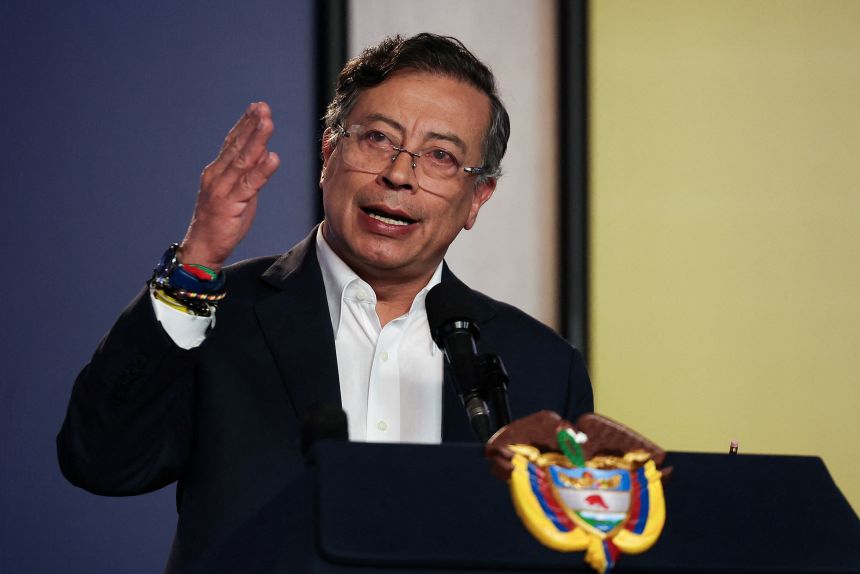
Colombian President Gustavo Petro on Sunday pushed back strongly against threats from US President Donald Trump, who accused him of involvement in drug trafficking and hinted at possible military action against Colombia.
The comments came a day after US forces carried out early-morning strikes on Caracas, targeting military sites in a surprise operation that led to the removal of Venezuelan President Nicolás Maduro and signalled Washington’s intention to assert control over the oil-rich nation.
Speaking to journalists aboard Air Force One on Sunday, Trump extended his aggressive rhetoric to Colombia, describing the country as “very sick too” and alleging it is “run by a sick man who likes making cocaine and selling it to the United States.”
“He has cocaine mills and cocaine factories and is not going to be doing it very long,” Trump said.
Asked whether Colombia could face a military operation similar to Venezuela’s, Trump replied, “It sounds good to me.”
“You know why, because they kill a lot of people,” he added, without providing evidence.
Petro swiftly rejected the claims, insisting they were baseless. “My name does not appear in court records,” he said in a post on X.
“Stop slandering me, Mr Trump,” Petro added. “That’s not how you threaten a Latin American president who emerged from the armed struggle and then from the people of Colombia’s fight for Peace.”
The Colombian leader has been an outspoken critic of the Trump administration’s military actions in the region and has accused Washington of seizing Maduro “without legal basis.”
In a separate message later on Sunday, Petro wrote simply, “Friends do not bomb.”
Colombia’s foreign ministry also condemned Trump’s remarks, describing them as “unacceptable interference” and demanding “respect.”
Although Colombia and the United States remain important military and economic partners in the region, relations between the two countries have grown increasingly tense.
Since Trump began his second term, both leaders have clashed repeatedly over issues including trade tariffs and migration policy, straining what was once a close alliance.

