



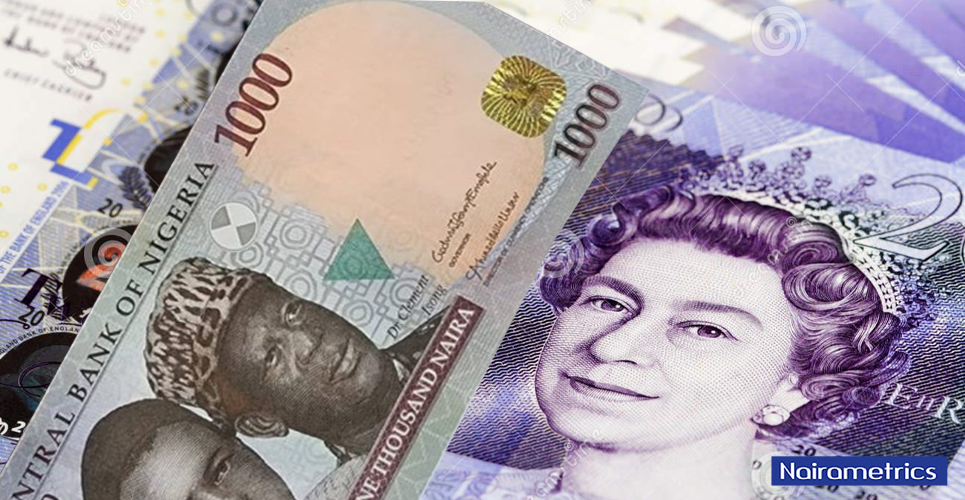
The British Pound Sterling continues to trade strongly against the Nigerian Naira, with a noticeable gap between the official exchange rate and the black market rate, according to data obtained from the NGNToday platform. The sustained disparity highlights ongoing pressure in Nigeria’s foreign exchange market, driven by demand for foreign currency and limited supply through official channels.
As of today, the official exchange rate for the British Pound stands at ₦1,934, while the currency is being traded at ₦1,965 on the black market, reflecting a ₦31 premium. This difference underscores the continued reliance of individuals and businesses on the parallel market to meet foreign exchange needs, particularly for overseas transactions, education, medical travel, and international trade.
Read related report from New Daily Prime:
January 2, 2026: Naira trades at ₦1,435 official rate, ₦1,480 at black Market
Britain pledges 600 million pounds to tackle construction skills shortages
Countries that use U.S. dollar as legal tender
Market analysts note that the Pound’s strength against the Naira is not solely a reflection of domestic economic challenges but also a result of global factors influencing the British currency. The Pound has remained relatively stable internationally, supported by monetary tightening policies and improved economic outlooks in the United Kingdom. In contrast, Nigeria continues to grapple with foreign exchange supply constraints, which fuel demand in the parallel market.
The persistent black market premium is a key indicator of underlying imbalances in the foreign exchange system. While the Central Bank of Nigeria (CBN) maintains the official rate to ensure stability and curb excessive volatility, many market participants argue that access to foreign exchange through official channels remains limited. As a result, the black market continues to serve as an alternative source, albeit at higher rates.
Businesses that rely on imports from the United Kingdom or transact in Pounds are among the most affected. The higher black market rate increases operational costs, which are often passed on to consumers through higher prices for goods and services. Students paying tuition fees abroad, families supporting relatives overseas, and travelers planning trips to the UK also face increased financial pressure due to the widening gap.
Financial experts believe that narrowing the difference between official and black market rates will require sustained policy interventions aimed at boosting foreign exchange inflows. Increased export earnings, improved oil revenue management, and enhanced investor confidence are often cited as critical steps toward stabilizing the Naira. Additionally, encouraging diaspora remittances through official channels could help ease pressure on the parallel market.
Despite ongoing challenges, some analysts remain cautiously optimistic, suggesting that improved transparency in the foreign exchange market and continued reforms could gradually reduce arbitrage opportunities. However, until supply meets demand, the black market premium for major currencies like the British Pound is likely to persist.
For Nigerians engaging in Pound-denominated transactions, financial advisors recommend closely monitoring exchange rate movements and planning ahead to mitigate currency risks. Staying informed through credible platforms such as NGNToday remains essential for making sound financial decisions in a volatile market.
As the foreign exchange landscape continues to evolve, the performance of the British Pound against the Naira will remain a key indicator of both domestic economic health and global market trends.
For more news, visit www.newdailyprime.news

