


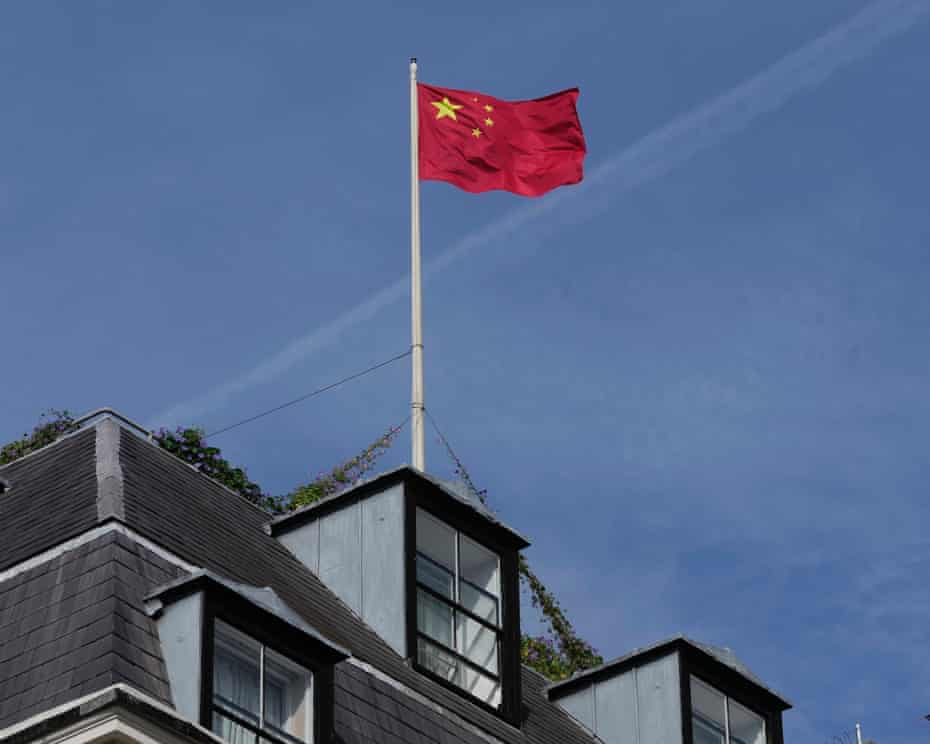
China has launched large-scale live-fire military drills around Taiwan, simulating a blockade of key ports, strikes on maritime targets and the deterrence of international involvement, in what Beijing described as a warning to “separatist” forces on the island.
The People’s Liberation Army (PLA) said naval, air force and rocket units were deployed on Monday morning to surround Taiwan. Chinese coast guard vessels were also sent to conduct what Beijing called “law enforcement inspections” in waters around Taiwan’s outlying islands.
The exercise, named Justice Mission 2025, was described by the PLA’s eastern theatre command as a “stern warning” to Taiwan independence supporters and to external forces. A spokesperson said the drills were a “legitimate and necessary action to safeguard China’s sovereignty and national unity”.
Taiwan’s defence ministry accused Beijing of escalating tensions and undermining regional stability. It said Taiwan had dispatched “appropriate forces” to respond and had begun its own combat-readiness exercises.
“Defending democracy and freedom is no provocation,” the ministry said, adding that the existence of the Republic of China, Taiwan’s formal name, did not justify aggressive actions.
Taiwan’s coast guard warned that the drills posed a serious risk to maritime safety, threatening shipping routes and the rights of fishermen operating in surrounding waters.
China claims Taiwan as part of its territory and has not ruled out the use of force to bring the island under its control. US intelligence has previously assessed that Beijing aims to be capable of launching an invasion by 2027, amid a rapid military modernisation programme.
While Chinese leaders, including President Xi Jinping, continue to call for “peaceful reunification”, pressure on Taiwan has intensified through military activity and other coercive measures. Most Taiwanese politicians and the public oppose rule by the Chinese Communist party, and the island has stepped up efforts to strengthen its defences.
The drills come amid rising tensions between China and Japan, following remarks by Japan’s prime minister, Sanae Takaichi, that Tokyo could become militarily involved if Taiwan were attacked. They also follow US approval of an $11bn arms package for Taiwan and recent speeches by Taiwan’s president, Lai Ching-te, pledging to improve combat readiness by 2027.
In its announcement, the PLA said its forces would approach Taiwan from multiple directions to test rapid manoeuvres, blockade operations and joint sea-air coordination. Maps released by the military marked exclusion zones in several areas north, north-west and south of the island.
The PLA said it had deployed destroyers, frigates, fighter jets, bombers, drones and long-range missiles, practising strikes against submarines and other maritime targets.
Chinese state media released propaganda images showing attacks directed at Taiwan, portraying independence supporters as insects and depicting a foreign warship retreating from the scene.
The full scale of the drills is not yet clear, but analysts said the designated exercise zones appeared larger and closer to Taiwan than in previous operations. They also noted that the PLA had explicitly referred to deterring international intervention, a relatively new emphasis.
William Yang, a senior analyst at the International Crisis Group, said the drills signalled China’s intention to strengthen and publicise its anti-access and area-denial capabilities.
Justice Mission 2025 is the sixth major PLA exercise targeting Taiwan since 2022, when China launched extensive drills following a visit by the then US House speaker, Nancy Pelosi. In April, the PLA conducted a two-day operation known as Strait Thunder-2025A, fuelling speculation that further exercises would follow.
Yang said Beijing was likely to monitor the US response closely before deciding its next steps, particularly during the second term of US president Donald Trump, who met Xi Jinping in October but did not discuss Taiwan.

