



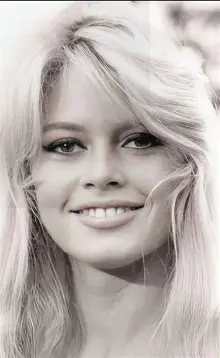
Brigitte Bardot, the French actor and singer who became one of the most recognisable sex symbols of the 20th century before abandoning cinema for animal rights activism, has died aged 91.
Her death was announced on Sunday by the Brigitte Bardot Foundation in a statement sent to Agence France-Presse. No details were given about when or where she died.
Tributes poured in from across France’s political and cultural spectrum. President Emmanuel Macron said Bardot had “embodied a life of freedom” and described her as “a legend of the century”.
Jordan Bardella, president of the far-right National Rally party, which Bardot supported, praised her as a woman of “conviction and character” and said she represented “a certain idea of courage and freedom”.
Marine Le Pen described Bardot as “exceptional for her talent, courage, frankness and beauty”, adding: “She was incredibly French. Free, indomitable, whole.”
The town hall in Saint-Tropez, closely associated with Bardot’s rise to fame, said she had helped make the town “shine across the world” and called her its “most radiant ambassador”.
Born in Paris in 1934 into a prosperous Catholic family, Bardot trained as a ballet dancer and studied at the Conservatoire de Paris. She also worked as a model and appeared on the cover of Elle at the age of 15.
Her modelling career led to film roles, and at an audition she met Roger Vadim, whom she married in 1952. After a series of minor parts, she rose to international fame in 1956 with And God Created Woman, written and directed by Vadim.
The film, shot in Saint-Tropez, was a major success and turned Bardot into a global icon. Over the next two decades she came to symbolise a new, liberated image of femininity and sexuality.
She went on to star in a string of high-profile films, including The Truth, Very Private Affair and Jean-Luc Godard’s Contempt. She also appeared in international productions such as Viva Maria! and the western Shalako opposite Sean Connery.
Beyond cinema, Bardot became a cultural phenomenon. She inspired artists, writers and musicians, and in 1969 became the first real-life model for Marianne, the symbol of the French republic.
Alongside her acting career, Bardot recorded music and worked with Serge Gainsbourg, including the original version of Je T’Aime… Moi Non Plus, which was later released with Jane Birkin after Bardot asked that her version be withheld.
Despite her fame, Bardot grew increasingly uncomfortable with celebrity life. She retired from acting in 1973 at the age of 39.
From the late 1970s onwards, she devoted herself to animal rights activism. She protested against seal hunting, campaigned on issues involving animal slaughter and founded the Brigitte Bardot Foundation in 1986.
She wrote to world leaders and spoke out on animal welfare across Europe and beyond. Her activism, however, was closely intertwined with outspoken political views.
Bardot repeatedly attracted controversy for comments about immigration, Islam, homosexuality and ethnic minorities. Between 1997 and 2008 she was convicted six times in French courts for inciting racial hatred and fined on multiple occasions.
A long-time supporter of the far right, she backed the National Front and later National Rally, and publicly endorsed Jean-Marie Le Pen’s views on immigration.
Bardot was married four times and had one son, Nicolas, born in 1960. She also had several high-profile relationships during her career.
Both celebrated and condemned, Brigitte Bardot leaves behind a legacy that shaped French cinema, popular culture and political debate for more than half a century.

