


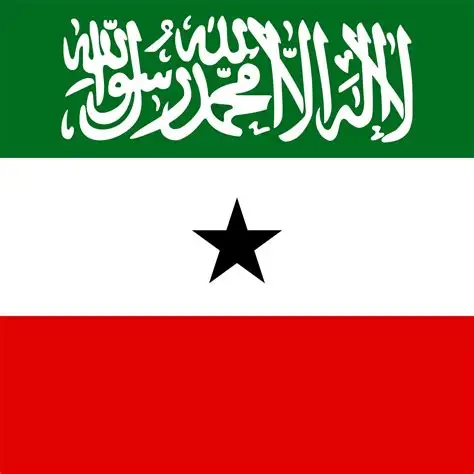
Israel has become the first country to formally recognise Somaliland as a sovereign state, marking a major breakthrough in Somaliland’s decades-long bid for international recognition.
The Israeli foreign minister, Gideon Sa’ar, announced on Friday that Israel and Somaliland had signed an agreement establishing full diplomatic relations. The deal includes plans to open embassies and appoint ambassadors.
Somaliland declared independence from Somalia in 1991 after the collapse of the central government but has not been recognised by any United Nations member state until now. It controls the north-western part of Somalia and operates as a de facto state.
The region borders Djibouti to the north-west and Ethiopia to the west and south.
Israel’s prime minister’s office said the move was made “in the spirit” of the Abraham accords, the series of normalisation agreements Israel signed with several Arab states in 2020.
A video released by the office showed Benjamin Netanyahu speaking by video call with Somaliland’s president, Abdirahman Mohamed Abdullahi. Netanyahu described the relationship between the two sides as “historic” and invited Abdullahi to visit Israel. Abdullahi said he would be “glad to be in Jerusalem as soon as possible”.
Donald Trump said he opposed US recognition of Somaliland in an interview with the New York Post, published on Friday. “Does anyone know what Somaliland is, really?” he said.
The US administration is reportedly divided over the issue. Some officials fear recognising Somaliland could damage military cooperation with Somalia, where US troops support government forces fighting the Islamist group al-Shabaab.
Somalia’s foreign ministry condemned Israel’s decision, calling it a “deliberate attack” on its sovereignty that would undermine regional peace.
The African Union echoed those concerns. In a statement, it said it “firmly rejects” the move and warned that it could set a dangerous precedent across the continent.
The AU’s chair, Mahamoud Ali Youssouf, said Somaliland “remains an integral part of the Federal Republic of Somalia”, which is a member of the union.
Egypt and Turkey also criticised Israel’s decision. Turkey said it amounted to interference in Somalia’s internal affairs and accused Israel of pursuing expansionist policies.
Sa’ar said the recognition followed a year of talks and that Israel’s foreign ministry had been instructed to immediately formalise ties with Somaliland.
Israeli analysts have said the move could serve Israel’s strategic interests, citing Somaliland’s proximity to Yemen. Israel has carried out airstrikes against Houthi rebels there over the past two years.
A November report by Israel’s Institute for National Security Studies said Somaliland could serve as a forward base for intelligence operations, logistics and possible missions against the Houthis.
Somaliland already hosts a United Arab Emirates military base in Berbera, which includes a port and an airstrip. Analysts say it plays a role in the UAE’s campaign against the Houthis.
In May, Somaliland’s president said senior US military officials had visited the territory and that further delegations were expected. “It’s a matter of time,” he said, “not if, but when and who will lead the recognition of Somaliland.”
Project 2025, published in 2023 and associated with policy thinking around Trump’s second administration, called for recognising Somaliland as a hedge against declining US influence in Djibouti, where China has expanded its presence.
In August, the Republican senator Ted Cruz wrote to Trump urging recognition of Somaliland, citing its ties to Israel and support for the Abraham accords.
Somaliland has a population of just over 6.2 million. It operates a democratic system with a record of peaceful transfers of power, though Freedom House has reported a recent erosion of political rights and civic space, including pressure on journalists and opposition figures.
Read more news at http://www.newdailyprime.news

