


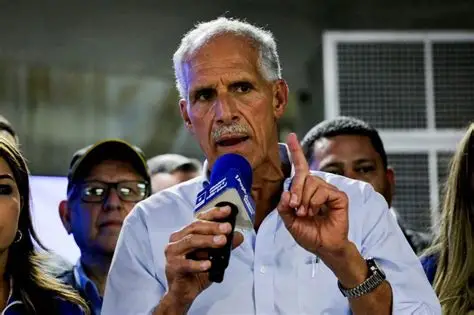
Donald Trump-backed candidate Nasry “Tito” Asfura has been declared the winner of Honduras’s presidential election after a vote count that stretched on for almost a month and was overshadowed by allegations of fraud and criticism of US interference.
Asfura, a rightwing politician and former mayor of the capital Tegucigalpa, won 40.27% of the vote. His closest rival, the centre-right candidate Salvador Nasralla, secured 39.53%, leaving a margin of about 28,000 votes.
The National Electoral Council (CNE) announced the result before completing a full review of tally sheets under a “special scrutiny” process launched last week to examine votes flagged as inconsistent.
The move drew criticism from losing candidates and concern from the Organization of American States (OAS), which sent observers to the 30 November election. The vote count has remained unresolved since polling day.
Asfura quickly declared himself president-elect, praising electoral officials and promising to govern responsibly. In a message posted online, he said he was ready to lead the country and would not disappoint voters.
Nasralla refused to concede defeat and accused electoral authorities of manipulating results. He alleged forgery of public documents and claimed data from original tally sheets had been altered.
Despite his accusations, Nasralla urged supporters to remain calm and avoid violence, describing the situation as “the saddest Christmas for the Honduran people”.
The results were also rejected by the president of Honduras’s congress, Luis Redondo, from the ruling Libre party. He described the declaration as unlawful and said it had no legal value.
The electoral council is made up of three members, each aligned with one of the main political forces. Asfura’s victory was declared by two councillors, while the representative linked to President Xiomara Castro’s party refused to endorse the result.
That councillor alleged an “electoral coup” and filed a complaint with the public prosecutor’s office, raising the possibility of a legal challenge.
In a formal statement, the council said it was acting on the will of the Honduran people and declared Asfura constitutional president for a four-year term beginning on 27 January 2026.
The early declaration added to a series of controversies that have marked the election, including claims of direct interference by the US president.
Days before the vote, Donald Trump publicly endorsed Asfura, warned that US support depended on his victory and attacked rival candidates, branding them communists or allies of Venezuela’s president, Nicolás Maduro.
On the eve of the election, Trump also announced a pardon for former Honduran president Juan Orlando Hernández, an ally of Asfura, who had been sentenced to 45 years in prison on drug trafficking charges.
Following the announcement of the result, the US secretary of state, Marco Rubio, congratulated Asfura. He said the United States recognised him as Honduras’s next president and looked forward to working with his administration.
