



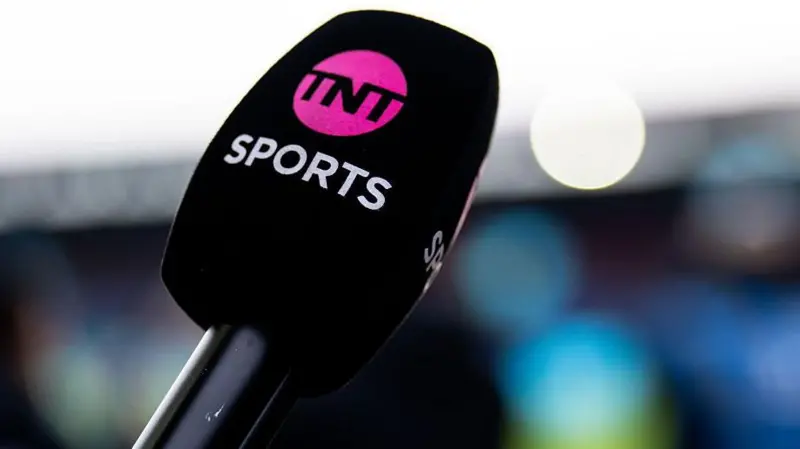
A high-stakes Hollywood power struggle could soon change the way millions of fans watch live sport, with Premier League executives among those monitoring developments closely.
At the centre of the storm is Warner Bros Discovery, the media giant that owns blockbuster entertainment brands such as Harry Potter, Barbie and Game of Thrones. Less glamorous, but just as valuable, is TNT Sports – a key player in the UK sports broadcasting market and a crucial subplot in a multi-billion dollar takeover battle involving Netflix and Paramount Skydance.
Whoever ultimately controls Warner Bros Discovery will inherit TNT Sports, and that decision could have far-reaching consequences for football fans, rights holders and broadcasters across the UK and beyond.
TNT Sports, formerly BT Sport, has been a disruptive force in sports rights since entering the market in 2012. It holds the Saturday lunchtime Premier League package, the FA Cup, and a portfolio spanning rugby union, motorsport and cycling. Its aggressive bidding helped inflate the value of Champions League rights, even though it will lose the competition to Paramount from 2027.
Strong competition is vital for maintaining high broadcast revenues, and TNT has played that role effectively. But uncertainty now hangs over its future. BT still owns 50% of the channel, though it is seeking to sell its remaining stake to Warner Bros Discovery, a move that could simplify any onward sale.
Netflix’s interest has raised eyebrows. While best known for on-demand drama and film, the streaming giant has been edging into live sport. High-profile boxing events, rights to the 2027 and 2031 Women’s World Cups in the United States, and partnerships with Fifa have signalled a shift in strategy. Securing TNT Sports could give Netflix a fast-track entry into the fiercely competitive UK sports rights market.
Yet questions remain about Netflix’s appetite. The company’s recent agreement with Warner Bros Discovery focuses on studios and streaming, with no explicit mention of TNT Sports. Its US sports operations are excluded, further muddying the waters. Analysts suggest Netflix recognises the power of live programming to drive subscriptions, but may still be weighing the financial realities of sustained sports investment.
Paramount Skydance, by contrast, appears a more natural home for TNT Sports. Paramount already holds significant sports rights, including the Champions League in the US and, from 2027, in the UK. Its failed $108bn bid for Warner Bros Discovery underlined its ambition, with what analysts describe as an “open chequebook” approach that appeals to rights holders.
For fans, the outcome could mean further fragmentation of subscriptions. Sky Sports, TNT Sports, DAZN, Premier Sports and Disney+ already compete for attention. From 2027, Paramount will join the mix for Champions League coverage unless mergers reshape the landscape first.
The next major flashpoint will be the Premier League’s UK rights auction in 2027. The current deal is worth £6.7bn, but there is scepticism that any broadcaster has the financial muscle to seriously challenge Sky’s dominance. Still, new ownership structures could increase competition – something the Premier League would welcome.
There is also the looming possibility of disruption from unexpected directions. Disney+ continues to expand its live sports offering, while the Premier League itself could one day launch a direct-to-consumer service, a concept often dubbed “Premflix”.
Whatever the outcome of the Hollywood battle, change feels inevitable. As streaming giants circle and traditional broadcasters adapt, fans should brace for further shifts in how, where and at what cost they watch live sport. The next era of sports broadcasting may be shaped not in stadiums, but in boardrooms thousands of miles away.

