


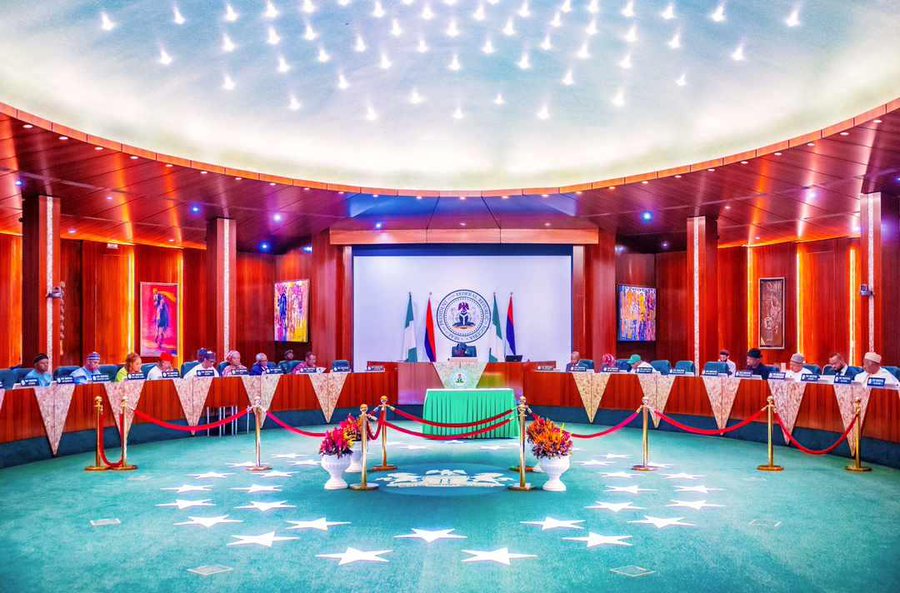
The Federal Executive Council (FEC) has approved the 2026 Appropriation Bill, paving the way for President Bola Ahmed Tinubu to formally present the budget to a joint session of the National Assembly on Friday afternoon.
The approval was disclosed by the President’s Special Assistant on Social Media, Mr Dada Olusegun, in a statement posted on his official X handle on Friday.
“The Federal Executive Council has approved the 2026 Budget, and it is now ready for presentation to a joint session of the National Assembly this afternoon by the President and Commander-in-Chief of the Armed Forces of the Federal Republic of Nigeria, Bola Ahmed Tinubu,” the statement read.
The council’s endorsement marks a critical milestone in Nigeria’s annual budgetary process and signals the commencement of legislative scrutiny of the proposed fiscal plan for the 2026 financial year.
According to sources familiar with the deliberations, the approval followed a series of extensive meetings by the FEC, during which the key assumptions, projections and policy priorities of the 2026–2028 Medium-Term Expenditure Framework (MTEF) and Fiscal Strategy Paper (FSP) were thoroughly reviewed.
READ ALSO: Tinubu submits 2026–2028 fiscal framework to Senate, begins new budget cycle
As part of the framework guiding the 2026 budget, the council had earlier agreed on major macroeconomic benchmarks to underpin revenue and expenditure projections. These include an oil price benchmark of $64.85 per barrel and an exchange rate assumption of ₦1,512 to one United States dollar for the 2026 fiscal year.
The oil price benchmark reflects ongoing efforts by the Tinubu administration to adopt more realistic assumptions in the face of global market volatility, geopolitical uncertainties and fluctuating crude oil output levels. Oil revenue remains a significant component of Nigeria’s income, despite renewed calls for economic diversification.
Similarly, the exchange rate assumption aligns with the government’s broader fiscal and monetary reforms, particularly those aimed at stabilising the foreign exchange market, improving investor confidence and boosting external reserves.
While details of the total budget size, sectoral allocations and deficit financing are expected to be unveiled during the President’s address to the National Assembly, analysts anticipate a continued emphasis on infrastructure development, social welfare, security and economic reforms.
The 2026 budget is also expected to reflect the administration’s medium-term objectives, including revenue mobilisation, debt sustainability, job creation and support for critical sectors such as education, healthcare and agriculture.
Following the presentation, the proposed budget will be subjected to debate and scrutiny by both chambers of the National Assembly. Lawmakers are expected to engage with key ministries, departments and agencies during the defence stage before final passage.
The timely approval and presentation of the 2026 budget underscore the government’s intention to maintain fiscal discipline and ensure continuity in policy implementation as Nigeria navigates ongoing economic challenges.
For more details, visit New Daily Prime at www.newdailyprime.news

