


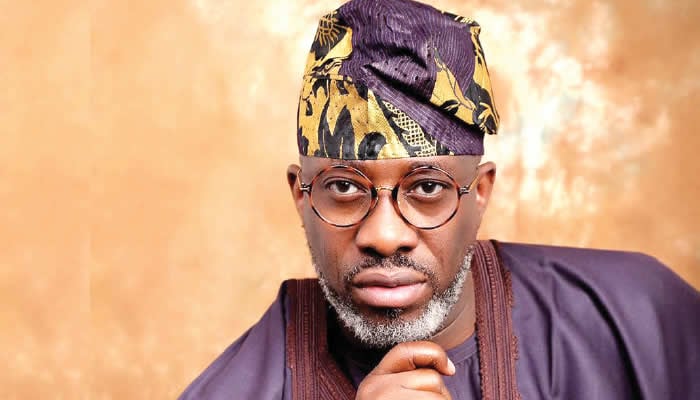
An Ogun State chieftain of the Peoples Democratic Party (PDP), Segun Showunmi, has criticised politicians who describe investigations or prosecutions by anti-graft agencies as persecution simply because they belong to opposition parties, warning that such narratives undermine accountability and the rule of law.
In a statement issued on Monday, Showunmi said Nigeria’s democracy is not under threat because public officials are being investigated, but rather because some political actors are attempting to weaponise opposition status as immunity from the law.
According to him, opposition politics does not confer a licence to steal or serve as a shield against accountability. He stressed that describing lawful investigations as “victimisation” is often a tactic aimed at pre-empting justice through propaganda rather than engaging with due process.
“Calling an investigation ‘victimisation’ does not make it so; it only signals an attempt to pre-empt justice with propaganda,” Showunmi said.
He noted that the Nigerian Constitution is explicit that no individual is above the law and mandates the state to combat corruption and abuse of power without exemptions for opposition figures, former office holders or political coalitions.
“The only immunity recognised by law is limited, specific and temporary, and it ends when a public officer leaves office. To suggest otherwise is to invent a privilege unknown to the Constitution,” he stated.
Showunmi further explained that the Economic and Financial Crimes Commission (EFCC) and other anti-corruption agencies are legally obligated to investigate allegations of economic and financial crimes whenever they arise. He added that investigation, arrest and prosecution, when conducted in line with the law, do not amount to violations of fundamental rights.
“This is settled by the Supreme Court, not by political press conferences,” he said.
The PDP chieftain also clarified that the presumption of innocence does not prevent individuals from being investigated, questioned or charged. According to him, innocence or guilt is ultimately determined by the courts.
“If you are innocent, the courts will clear you. If you are not, the law will take its course. That is the essence of the rule of law,” Showunmi said.
He rejected arguments suggesting that alleged corruption by others should excuse individuals facing prosecution, noting that Nigerian courts have consistently ruled that accountability is personal and justice is individual.
“What truly threatens Nigeria’s multiparty democracy is not the EFCC doing its job, but the growing attempt to intimidate, delegitimise or blackmail anti-corruption institutions whenever investigations touch politically exposed persons,” he warned.
Showunmi concluded that democracy does not mean freedom from scrutiny but submission to the law, particularly by those entrusted with public office. He urged politicians facing investigation to pursue competent legal defence and respect due process, rather than resorting to alarmism, political noise or attempts to discredit anti-graft institutions.

