


Donald Trump has intensified pressure on Venezuela’s president Nicolás Maduro, expanding sanctions and threatening strikes on land targets, as the Venezuelan leader accused Washington of ushering in a new “era of criminal naval piracy” in the Caribbean.
On Thursday, the United States imposed sanctions on three nephews of Maduro’s wife, Cilia Flores, as well as six crude oil supertankers and their associated shipping companies. The US Treasury alleged the vessels had engaged in “deceptive and unsafe shipping practices” and continued to provide financial resources to what it described as Maduro’s “corrupt narco-terrorist regime”.
Documents from Venezuela’s state oil company PDVSA showed the tankers had recently loaded crude oil in the country. Four are registered under Panama’s flag, while the remaining two are flagged in the Cook Islands and Hong Kong.
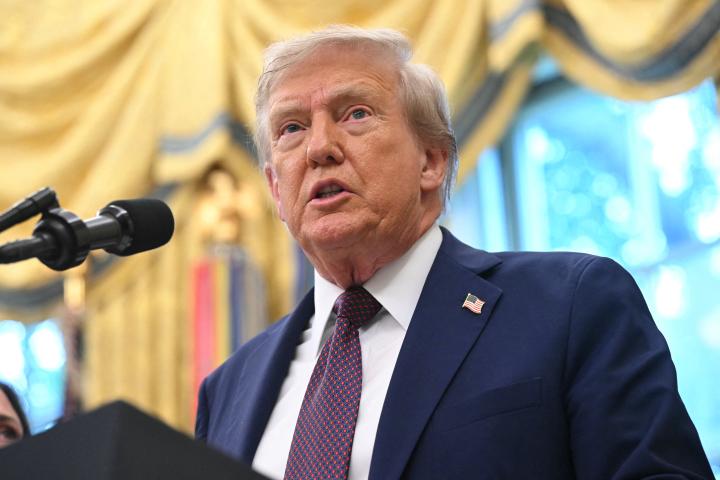
Trump repeated his threat to strike suspected narcotics shipments travelling by land from Venezuela to the United States. His remarks followed the seizure of a Guyana-flagged tanker, the Skipper, off Venezuela’s coast, an operation that has prompted warnings from US lawmakers that the administration risks “sleepwalking into a war with Venezuela”.
Maduro responded defiantly, accusing Washington of “kidnapping the crew” and “stealing the ship”. He vowed Venezuela would secure all vessels to guarantee the free trade of its oil.
White House press secretary Karoline Leavitt confirmed the Skipper would be taken to a US port, where its cargo would be subject to a legal seizure process. Trump had earlier told reporters the United States intended to “keep” the oil. Leavitt insisted the move was consistent with sanctions policy, adding: “Prolonged war is definitely not something this president is interested in.”
Read Also: Trump to impose visa ban on persons linked to alleged Christians genocide in Nigeria
Reuters reported that Washington is preparing to seize more tankers off Venezuela’s coast. Leavitt declined to confirm but said the US would not allow “sanctioned vessels [to] sail the seas with black market oil”.
The seizure drew condemnation from senior Democratic lawmakers and at least one Republican, who warned of escalating tensions. Russia’s president, Vladimir Putin, telephoned Maduro to express solidarity and reaffirm economic and energy cooperation, including offshore ventures in the Caribbean.
Maduro’s government denounced the seizure as “blatant theft” and “an act of international piracy”, pledging to defend Venezuela’s sovereignty and natural resources. Neighbouring Colombia suggested asylum could be offered to Maduro if he chose to leave. Foreign minister Rosa Villavicencio said her country “would have no reason to say no”, though she believed he might prefer to go further afield. President Gustavo Petro has called for a general amnesty and transitional government, while rejecting foreign military intervention.
Brazilian presidential adviser Celso Amorim noted asylum was a longstanding Latin American institution but declined to speculate further. Opposition leader María Corina Machado, speaking in Oslo after receiving the Nobel peace prize, repeated her call for Maduro to step down, predicting he would soon have no choice.
At a rally in Caracas, Maduro urged supporters to be ready to “smash the teeth of the North American empire if necessary”, before dancing to Bobby McFerrin’s Don’t Worry Be Happy.
Ricardo Hausmann, a former Venezuelan minister, argued that only increased US military pressure could force Maduro into exile. He compared the threat to the fate of Iranian general Qasem Soleimani, killed in a US strike in 2020.
Maduro, who succeeded Hugo Chávez in 2013, has faced accusations of authoritarianism and electoral fraud. Independent analysis of last year’s vote suggested he lost heavily to opposition candidate Edmundo González, though Maduro claimed victory. Even allies in Brazil and Colombia have refused to recognise his mandate.
The seizure of the Skipper coincided with attacks on other “dark fleet” ships transporting oil between sanctioned countries. Maritime data indicated the vessel had repeatedly falsified its location and carried oil to China after trips to Venezuela and Iran. Analysts said the US action signalled that such tankers were now considered legitimate military targets.
The Trump administration framed the seizure as a law enforcement operation led by the US Coast Guard. Attorney General Pam Bondi said the tanker had long been sanctioned for involvement in illicit oil networks supporting terrorist organisations. She stressed the operation was conducted “safely and securely” and investigations with the Department of Homeland Security would continue.
