


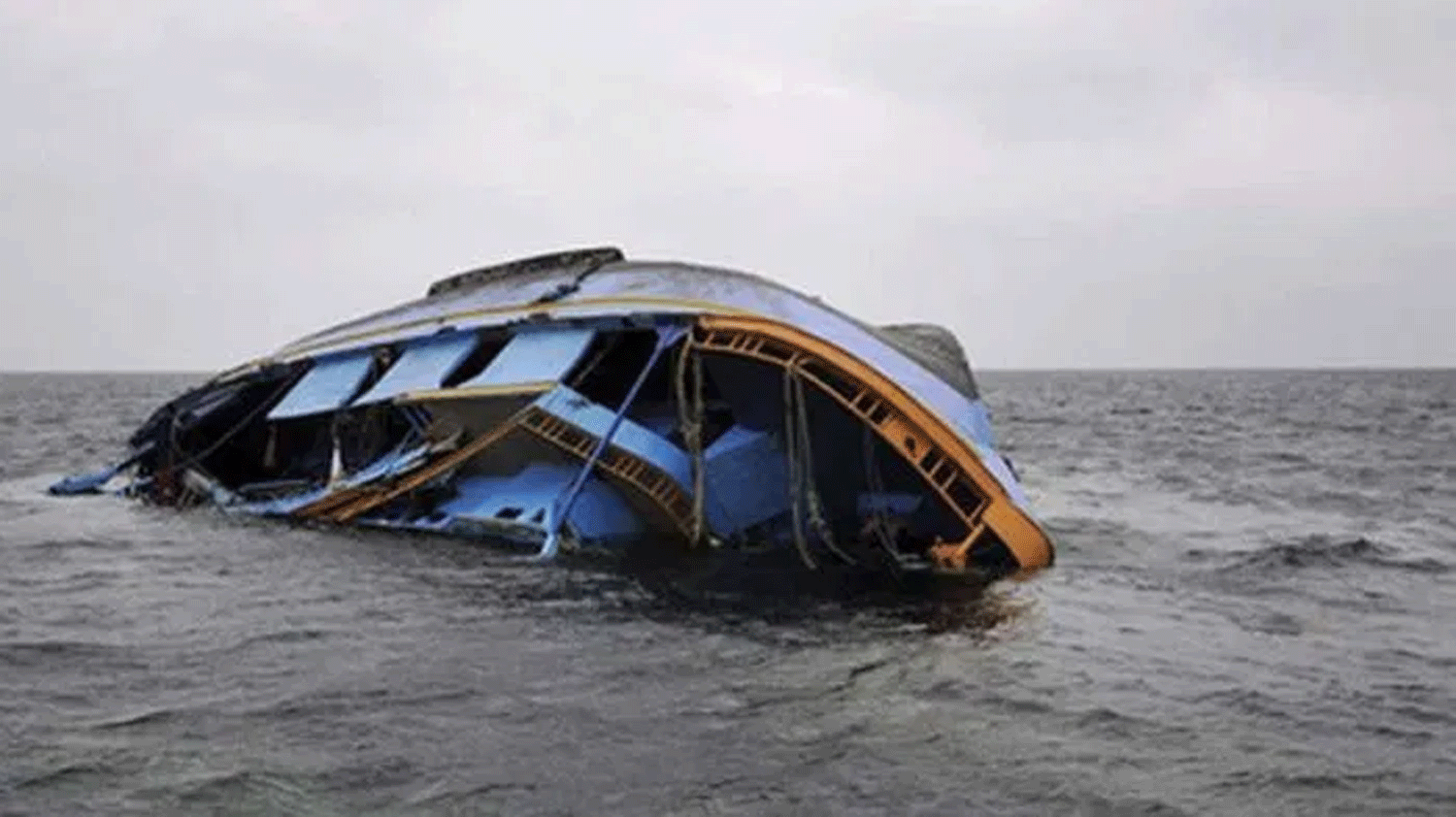
The Pentagon announced Thursday that the US military carried out another deadly strike on a boat suspected of transporting illegal narcotics in the eastern Pacific, killing four men. The operation has intensified questions over the legality of the campaign, which has now claimed at least 87 lives since September.
Video of the strike was released by US Southern Command, based in Florida. The footage showed a sudden explosion engulfing a small vessel, followed by images of flames and thick smoke. In its statement, the command said that, under the direction of Defense Secretary Pete Hegseth, “Joint Task Force Southern Spear conducted a lethal kinetic strike on a vessel in international waters operated by a Designated Terrorist Organization.”
Officials said intelligence confirmed the boat was carrying narcotics along a known trafficking route. The Pentagon described the men killed as “narco-terrorists.”
This latest strike is the 22nd in a series of attacks on vessels in the Caribbean Sea and eastern Pacific. It is the first publicly acknowledged strike in nearly three weeks, during which the Pentagon and White House have faced mounting scrutiny over the legal basis for targeting suspected smugglers.
The controversy stems from a September 2 strike in which two survivors clinging to wreckage were killed in a follow-on attack. A Washington Post report alleged that Hegseth had verbally directed the military to “kill them all.” On Thursday, a Democratic lawmaker introduced articles of impeachment against Hegseth, citing the boat strike and accusations that he improperly shared information about an attack on Signal. The effort is considered unlikely to succeed.
The admiral who commanded the September operation told lawmakers there was no order to kill everyone aboard. Still, Representative Jim Himes of Connecticut described the footage of the survivors as “one of the most troubling things I’ve seen in my time in public service.”
“You have two individuals in clear distress, without any means of locomotion, with a destroyed vessel,” Himes said.
Senator Tom Cotton of Arkansas offered a different view, arguing the footage showed “two survivors trying to flip a boat loaded with drugs, bound for the United States, back over so they could stay in the fight.” He suggested nearby traffickers may have been attempting to rescue them.
Legal experts have strongly challenged that interpretation. Ryan Goodman, a law professor at New York University and former Pentagon lawyer, dismissed Cotton’s remarks, writing that the survivors were clearly clinging to life rather than engaging in combat.
The administration has defended the strikes by framing them as part of a war against drug traffickers, claiming they are legal under the rules of war. Most legal scholars reject that rationale.
Rebecca Ingber, a professor at Cardozo Law School and former State Department legal adviser, said even if the traffickers were considered combatants, it would be unlawful to kill them once incapacitated.
“It is manifestly unlawful to kill someone who’s been shipwrecked,” Ingber said.
The debate underscores growing unease in Washington over the Pentagon’s campaign, as lawmakers and legal experts continue to question its legitimacy under international law.
