


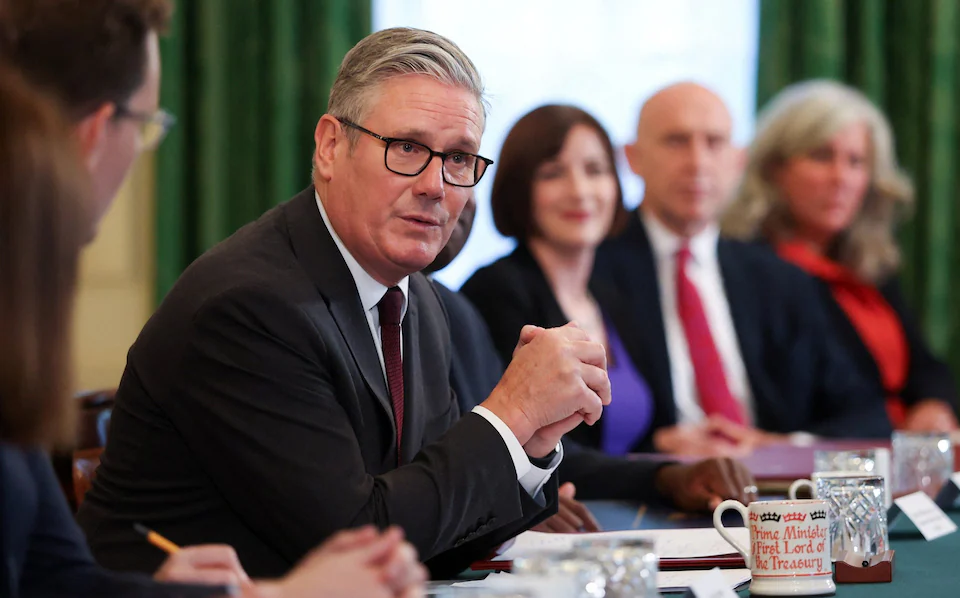
Keir Starmer says Labour’s economic strategy will take several years to fully deliver, as he moves to regain control of the political narrative following criticism of last week’s budget.
Recent report revealed the prime minister backed Chancellor Rachel Reeves’s decision to introduce £26bn in tax rises, arguing that the government must be judged at the end of the parliament, not after a single budget.
He said Labour is focused on long-term reforms rather than quick fixes, insisting this is the only way to rebuild Britain’s economy and public services.
Starmer criticised both left- and right-wing opponents, saying their ideas would lead to decline. He rejected calls for more borrowing or a return to austerity, arguing instead for a balanced approach that avoids short-term political pressures.
In a major speech on Monday, Starmer will set out Labour’s multiyear plan centred on deregulation to speed up major infrastructure projects, welfare reform, and closer ties with Europe.
He has asked Business Secretary Peter Kyle to explore ways to simplify planning rules and former health secretary Alan Milburn to examine how mental health and disability issues contribute to youth unemployment.
The government is also preparing another round of welfare reforms after Starmer’s earlier attempt to cut disability benefits met resistance from his own MPs. He argued that the welfare system must support people properly while preventing long-term dependency.
The budget itself has split opinion. While financial markets welcomed the tax rises and Labour MPs celebrated the removal of the two-child benefit cap, Reeves has faced accusations especially from Conservative leader Kemi Badenoch of misleading voters about the Office for Budget Responsibility’s forecasts. Badenoch has called for her resignation.
Reeves denies any wrongdoing, telling the media she had to act responsibly to protect public finances. Senior Treasury minister Darren Jones also defended her, saying the final OBR figures were not confirmed until the end of the process.
Despite the controversy, polling shows public opinion on Reeves remains unchanged a sign that the budget has neither boosted nor harmed her standing with voters.
