


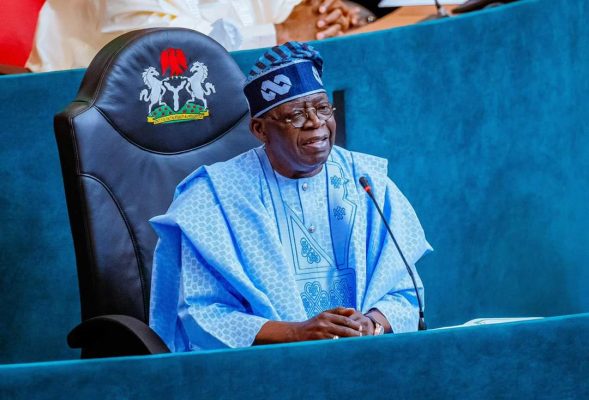
President Bola Tinubu has urged Nigerians to support security agencies with timely intelligence, describing the fight against terrorism, banditry, kidnapping, and violent extremism as a national responsibility that cannot be left to security forces alone.
The President made the appeal in a statement where he commended military personnel and other frontline security operatives for their role in combating insecurity across the country.
His remarks come at a time when concerns over attacks by terrorists, bandits, kidnappers, and other armed groups continue to prevail public discourse in several parts of Nigeria, with communities increasingly demanding stronger security measures and improved protection of lives and property.
READ RELATED NEWS UPDATES
Oyo insecurity worsens: Seyi Makinde under fire, Tinubu under pressure
NLC, TUC threaten Nationwide strike over rising insecurity
Tinubu vows to defeat terrorism, banditry as Nigeria marks Democracy Day 2026
Acknowledging the pressure on security personnel, Tinubu praised members of the Armed Forces, the Nigeria Police Force, the Department of State Services, the Nigeria Security and Civil Defence Corps, intelligence agencies, and local security formations for what he described as commitment to protecting the country despite difficult operating conditions.
He stated that security personnel are the barrier between law-abiding citizens and criminal elements seeking to destabilise communities.
The President noted that security operatives continue to serve in forests, remote settlements, waterways, highways, forward operating bases, and other challenging environments to safeguard millions of Nigerians.
While commending their efforts, Tinubu also used the statement to emphasise the role of ordinary citizens in strengthening national security
He argued that intelligence supplied by members of the public remains a critical component of security operations and urged Nigerians to promptly report suspicious activities within their communities.
According to him, the responsibility of confronting insecurity goes beyond military operations and requires active cooperation between citizens and security institutions.
The President’s position reflects a recurring argument advanced by security experts, who have consistently identified local intelligence and community vigilance as essential tools in addressing contemporary security threats.
While security agencies have recorded successes in various operations against criminal groups, public concerns still persist over recurring attacks in several parts of the country, particularly in rural communities where residents often complain of delayed responses and inadequate security presence.
Tinubu acknowledged the sacrifices made by security personnel. He noted that the campaign against insecurity has come with significant costs, including loss of lives, prolonged deployments, and difficult working conditions.
He also paid tribute to families of security operatives, saying many have endured long periods of separation and uncertainty because of the demands of national service.
The President further honoured officers and personnel who lost their lives during security operations where he described their sacrifices as contributions to the protection and survival of the nation.
According to him, the impact of their service can be seen in communities rescued from attacks, families protected from harm, and efforts to preserve peace and stability.
Tinubu maintained that Nigeria would not surrender to fear or allow violent groups to define its identity.
He stressed further that terrorism, banditry, kidnapping, and violent extremism do not represent the values of Nigerians, regardless of ethnic, religious, or regional differences.
The President also reiterated his administration’s support for frontline personnel and expressed confidence in their continued efforts to confront security threats across the country.
His statement adds to ongoing conversations about how Nigeria can strengthen its security architecture amidst growing calls for improved intelligence gathering, better-equipped security agencies, stronger community participation, and more effective responses to emerging threats.
As far many Nigerians are concerned, the President’s message underscores a reality increasingly recognised in security circles: military force alone may not be sufficient to address complex security challenges without sustained cooperation from the communities most affected by them.
For More Details, Visit New Daily Prime

