


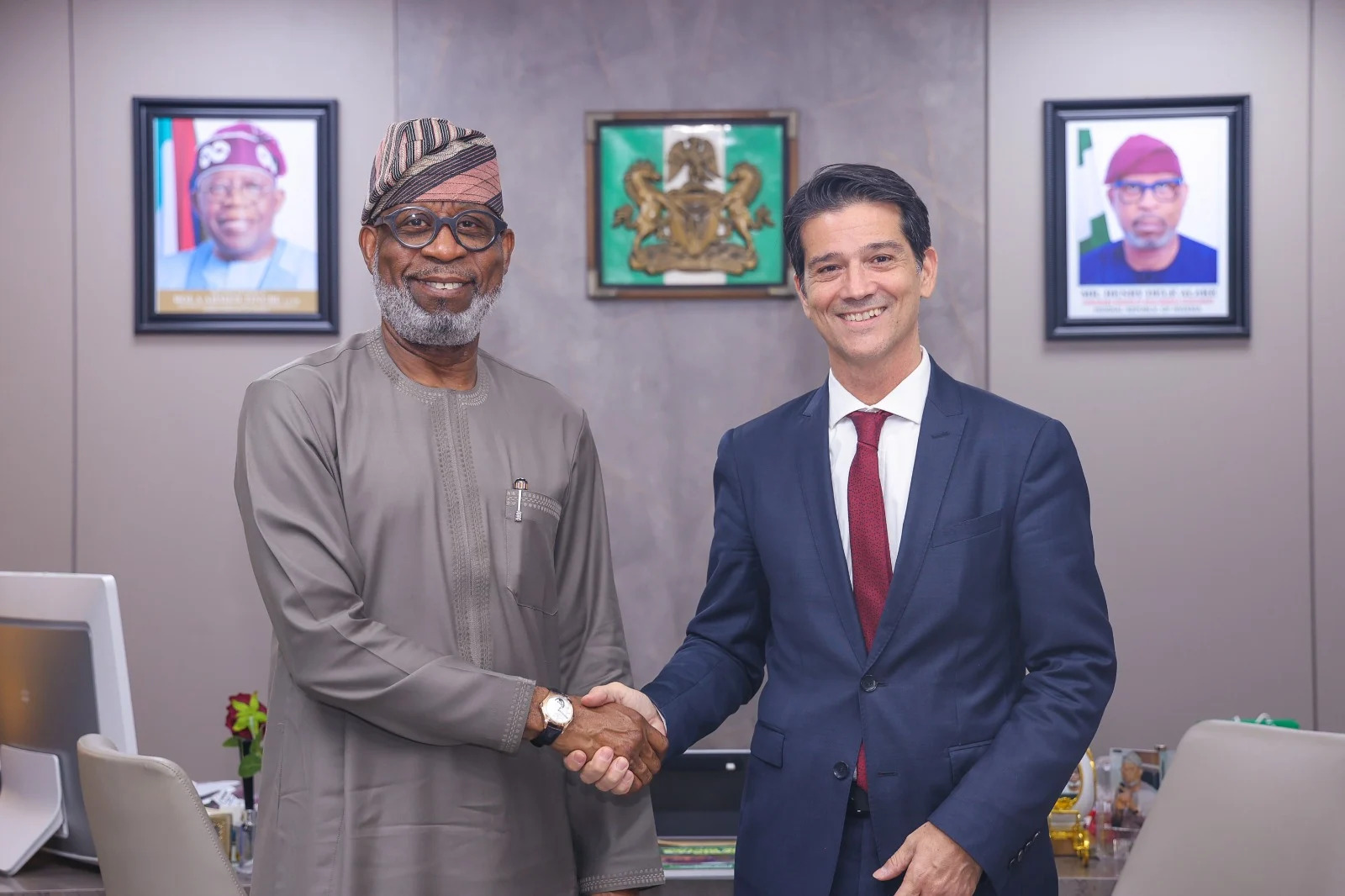
The Federal Government of Nigeria has intensified its push to overhaul the nation’s mining industry, signalling a renewed commitment to international collaboration aimed at unlocking the sector’s vast economic potential.
This follows a meeting in Abuja between the Minister of Solid Minerals Development, Dele Alake and the Canadian High Commissioner to Nigeria, Pasquale Salvaggio, where both sides reaffirmed their readiness to deepen cooperation.
According to a statement issued by the minister’s Special Assistant on Media, Segun Tomori, the discussions, held in Abuja on Thursday, focused on leveraging Canada’s advanced mining technology and global expertise to support Nigeria’s reform agenda. Alake described Canada as a long-standing ally, recalling its firm support during Nigeria’s pro-democracy struggle following the annulment of the June 12, 1993 presidential election.
“Canada stood firmly with the Nigerian people during our pro-democracy struggle. The cooperation we enjoyed from the Canadian High Commission was exemplary,” he said. Alake emphasised that the renewed partnership would prioritise investment attraction, technology transfer, and the adoption of international best practices to drive sustainable sectoral growth.
The minister restated the government’s commitment to establishing a transparent, investor-friendly operating environment. Key priorities include the formalisation of artisanal mining, capacity building for local professionals, and strengthening regulatory oversight to curb illegal activities.
He highlighted a range of incentives designed to boost investor confidence, such as tax waivers on imported mining equipment and guaranteed repatriation of profits after statutory obligations are met.
“These incentives demonstrate our seriousness in creating a competitive investment climate. We want Nigeria to become one of the most attractive mining destinations globally,” he added.
For his part, Salvaggio praised Nigeria’s acknowledgement of Canada’s role in its democratic journey and commended Alake for recognising Canada’s leadership in the global mining landscape. He noted that Nigeria is already Canada’s second-largest trading partner in Africa and expressed optimism that it could soon become the largest, given its “dynamism and entrepreneurial spirit”.
Salvaggio also welcomed the establishment of the Nigeria Solid Minerals Company, describing it as a strategic institution capable of enhancing investor confidence and improving governance standards within the sector. He further highlighted strong people-to-people ties, particularly the presence of a large Nigerian diaspora in Canada, which he described as a solid foundation for deeper economic cooperation.
The envoy urged the Federal Government to expedite the ratification of the stalled Foreign Investment Promotion and Protection Agreement (FIPA), stating that it would significantly strengthen investor security. He reiterated Canada’s readiness to support capacity-building programmes, including training for Nigerian mining professionals at the University of Calgary in Alberta.
Alake assured Salvaggio that the agreement—initiated before the current administration—would be reviewed and fast-tracked in line with President Bola Tinubu’s commitment to driving foreign direct investment and economic transformation.
Both countries agreed to create a joint working group to develop clear timelines and priority areas for cooperation, marking a significant step in Nigeria’s efforts to diversify its economy and reduce dependence on oil revenues.
