



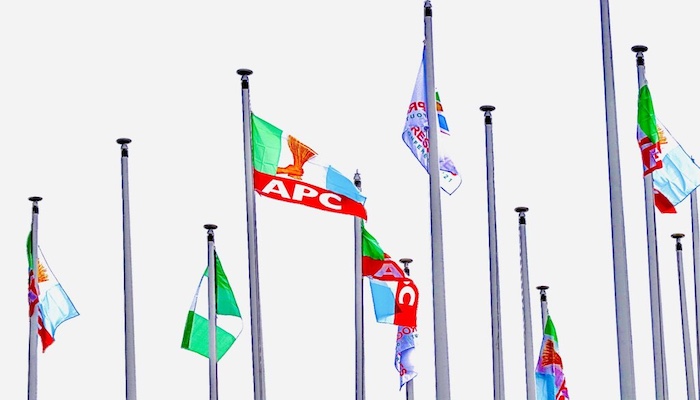
The ruling All Progressives Congress has unveiled a new policy think tank, the Progressive Institute, in a move aimed at sharpening its ideological focus and strengthening evidence-based governance as Nigeria heads toward the 2027 elections.
The party on Wednesday inaugurated the Governing Council of the institute, describing it as a decisive shift from politics driven mainly by electoral calculations to one anchored in ideas, research and long-term planning. National Chairman Nentawe Yilwatda said the institute represents “a decisive step toward entrenching ideology-driven politics and policy-based governance.”
First announced in September 2024 at the instance of President Bola Tinubu, the institute has now been formally registered with the Corporate Affairs Commission and secured approvals from relevant education regulators. According to party officials, it will function as a full-fledged think tank, with statutory responsibilities covering public policy research, leadership development, international conferences and the preservation of the APC’s institutional memory.
Read related New from New Daily Prime:
ADC brands APC ‘terrorist organisation’ over alleged Edo attack, threatens ECOWAS court action
FCT polls expose ‘emergency democrats’, says Wike after APC wins five councils
Wike says APC poll victories reflect rising confidence in Tinubu’s policies
Director-General Lanre Adebayo said the institute has already begun laying foundations for its work. He cited early skill-acquisition programmes across several states and emerging partnerships with international bodies, including the European Union. Planned activities include workshops on intra-party democracy, election management and institution-building—areas where Nigerian political parties have historically struggled.
For the APC, which has governed since 2015, the launch carries political and symbolic weight. Critics have long argued that the party functions more as a coalition of interests than as an ideologically coherent organisation. By institutionalising policy research and training, the party hopes to provide governors, lawmakers and officials with structured intellectual support rather than relying on ad-hoc advice.
However, scepticism remains. With inflation high, economic reforms biting and opposition parties reorganising, observers note that the timing raises questions about whether the institute will offer practical solutions or become another elite forum with limited impact. Much will depend on whether it is allowed to operate with intellectual independence or simply mirror positions from the presidency.
Yilwatda was careful to acknowledge the role of former national chairman Abdullahi Ganduje, crediting him with laying the groundwork for the institute. Party officials say the composition of the Governing Council—which includes academics and policy professionals—is meant to underline seriousness rather than symbolism.
Beyond partisan politics, analysts say the initiative could have broader implications for Nigeria’s democracy. Political parties have often treated governance as patronage distribution rather than problem-solving. A functioning policy institute, if taken seriously, could raise the quality of debate and force rival parties to strengthen their own intellectual infrastructure.
For now, the APC has staked a claim to being more than an election-winning platform. Whether the Progressive Institute becomes a genuine ideas factory or fades into political theatre will be judged by the relevance and quality of the policies it produces in the run-up to 2027. Nigerians, increasingly weary of slogans, will be watching closely.

