


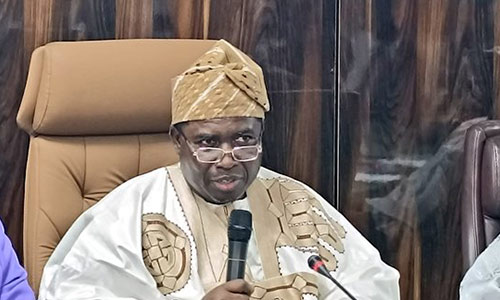
The Independent National Electoral Commission (INEC) has confirmed that it will review the Electoral Act 2026 to ensure full compliance with the law as preparations intensify for the 2027 general elections.
Mr Adedayo Oketola, Chief Press Secretary and Media Adviser to the INEC Chairman, Prof. Joash Amupitan, disclosed that the commission would issue a revised timetable in light of the new legislation. Although he did not specify when the updated schedule would be released, he emphasised that the electoral body remained committed to operating strictly within the framework of the law.
“The recently released timetable by INEC was done in accordance with the Constitution of the Federal Republic of Nigeria 1999 (as amended) and Section 28(1) of the Electoral Act 2022. The commission will review the new Electoral Act 2026. After this, a revised timetable should be released,” Oketola said.
INEC had earlier announced that presidential and National Assembly elections would be held on 20 February 2027, with governorship and state Houses of Assembly polls scheduled for 6 March 2027. However, the timetable drew criticism from some quarters, particularly Muslim groups, who argued that the dates clashed with the holy month of Ramadan.
READ MORE: INEC seeks N873.78bn for 2027 elections
Amid the controversy, the National Assembly passed the Electoral Act 2026, reducing the mandatory notice period for elections from 360 days to 300 days. The amendment effectively grants INEC greater flexibility to fix election dates, potentially allowing the presidential and National Assembly polls to be conducted between late December 2026 and January 2027.
Legal experts have argued that the commission cannot continue preparations under the repealed 2022 Act. Senior Advocate of Nigeria, Mr Femi Falana, insisted that a fresh timetable was not optional. “There must be a new timetable in line with the new electoral act. That is the place of law,” he said.
A senior constitutional lawyer, who requested anonymity due to advisory engagements with political parties, explained that once a new law comes into force, it supersedes prior frameworks. According to him, election timetables are legal instruments derived directly from statute. “If the Act changes, the derivative instrument must also change. Otherwise, you create a conflict between statutory law and administrative action,” he warned, adding that failure to adjust the calendar could trigger a wave of pre-election litigation.
Political parties have also called for clarity. The African Democratic Congress (ADC) said adequate notice was essential to organise primaries, congresses and national conventions. The New Nigeria Peoples Party (NNPP) urged the commission to act swiftly, particularly if elections are brought forward. Meanwhile, the Peoples Democratic Party (PDP) stressed that the timetable must align with the amended law to allow proper preparation.
Separately, the Pentecostal Fellowship of Nigeria (PFN) criticised calls to alter election dates on religious grounds. Its National Secretary, Bishop David Bakare, argued that adjusting civic processes to accommodate religious observances risked undermining Nigeria’s secular status. He maintained that elections should remain constitutional exercises, insulated from sectarian considerations.
As pressure mounts from legal experts, political actors and religious bodies, attention now turns to INEC’s next move. With the 2027 elections approaching, stakeholders agree on one point: the credibility and stability of the process will depend on a transparent, lawful and widely accepted electoral timetable.

