
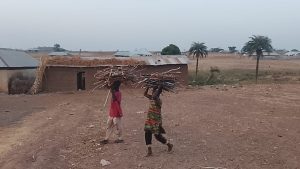
In Erena town, Shiroro Local Government Area of Niger State, deforestation has quietly crept into the classroom. At dawn, children aged 10 to 16 embark on hours-long treks along dusty footpaths into depleted forest in search of firewood — a daily routine that often leaves them late for school or absent altogether.
“We sell the woods that we get from the bush”, Muhammadu Ibrahim, a 14-year old boy told New Daily Prime. “In every piece of logging that we get from the bush, we sell them at the rate of N2000 or N25000.”
Ibrahim spent nearly four years away from school, surviving by venturing into the bush to log timber. He says he never intended to leave school, but hunger forced him into the forest to make a living.
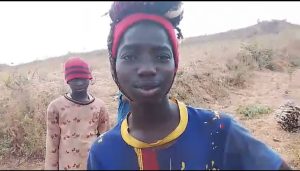
“We depend on this logging to survive which is affecting our education. We also hoped to be in class but hunger has pushed us out. We really want to stop it but we have no option to survive,” Ibrahim said.
“The residents chased us,” Ibrahim said, as this reporter found him logging. He explained that hunger often drives them into the forest, forcing them to miss school.
READ RELATED UPDATE FROM NEW DAILY PRIME: Niger community resorts to muddy puddles as water sources dry up
Climate Change: Shettima urges practical action as Ethiopia launches green legacy initiative
Epstein weighed Nigeria crude oil deal, backed out over fraud fears — Report
Daka to Erena: Children trek nearly hours to get firewoods
15 year-old logger Jamilu Yusuf endures a daily two-hour trek to Erena town to collect firewood for survival. When this reporter met Yusuf returning from the forest, he said logging is the only means by which he sustains himself.

“I spend two good hours walking from Daka to Erena whenever I want to get firewood”, he said, adding that this has led him to miss his class.
“It has been over 3 months since I started going for logging. We get them to sell and also use them for cooking”, Yunusa added.
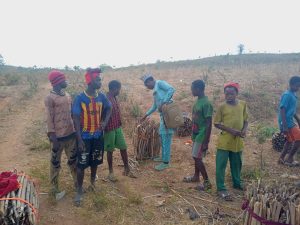
Driven by poverty, Yusuf now relies on logging to survive. The practice has not only endangered his future but has also disrupted his western and Islamic education, effectively derailing his childhood dreams.
“It really affects our education. It has been one year since this afffects us including our Islamic education. When we go for logging, we don’t even go to school”, he said.
96.5 thousand hectares of natural forest lost in 2021
Deforestation, largely driven by human activities, is a major source of carbon dioxide (CO₂) emissions, making it critical to monitor tree loss in Nigeria.
According to Global Forest Watch, the West Africa country lost 96.5 thousand hectares of natural forest in 2021, releasing 58.5 million tonnes of CO₂ a slight improvement from the 99.2 thousand hectares lost in 2020, which accounted for 59.5 million tonnes of CO₂.
Over a 21-year period from 2001 to 2021, Nigeria has lost a cumulative 1.14 million hectares of tree cover, resulting in 587 million tonnes of CO₂ emissions. While reducing deforestation is a national priority, certain states Edo, Ondo, Cross River, and Taraba deserve special attention, having contributed 54% of the total tree cover loss in the country during this period.
A ten year old Sadiqu Abubakar has been out of school since he was 8-years. Driven away from school by poverty, Abubakar has not returned to class again since then. Now, the teen boy also joined others to deforestate trees in Erena town.

“In a week, I go into the forest to get firewood twice”, the boy told New Daily Prime. “Sometimes, we sell it and also use it domestically. It affects me educationally”.
Abubakar, who combines Western and Arabic education, rarely attends school because of the money he earns from selling firewood to residents of Erena.
Although he says he longs to return to the classroom, the weekly income he makes from logging driven by poverty has kept him away from his studies and forced him to put his dreams on hold.
Safiyat Erena, a 8-year old girl’s plight is not like others. She fetches water daily for her mother in nearby dried up stream for domestic uses. Daily, she would go to the stream morning and afternoon to fetch water for her mother.

The 8-old girl told New Daily Prime that she would line up and wait for her turn before getting water. Her mother had to wait for her to return early just to prepare for school.
“It has been over one year since we searched for water in this community. We go to a dried up stream early in the morning and afternoon to get water for domestic use”, she said
She further told she and other residents in the community had to wait for the water to spring out before they scoop it into a bowl.
Usman Ibrahim Kuta, the chairman of the coalition of Shiroro youths urges the government to intervene on the plight of the people, noting that portable water and logging must be addressed urgently.
“The government should intervene to enable portable drinking water for them and improve the standard of living of the people”, he said. “If these things are done, there should not be a need for them to go to the bush in the first place or fetch water in the river”..
He stressed that once the provision of basic necessities is not made, the residents need to find a way to survive.
Expert Warns Child-Driven Logging Deepens Climate Crisis
Mr Philip Jakpor, a climate change expert and Executive Director of the Renevlyn Development Initiative (RDI), a non-governmental organisation, blamed the government for failing to educate the children on the immediate and long term environmental implication of illegal logging.
He told New Daily Prime; “The children are only victims of the failures of the government to educate them on the immediate and long term environmental implications of illegal logging and also tackle poverty so that they are not vulnerable and tempted to engage in the practice”.
Jakpor warned that if poverty is not addressed the gospel of conservation and environmental protection is like pouring water on rock.
He further added that the implications is the natural cover and oxygen that trees are supposed to emit are lost and man is exposed to the elements, stressing that food security is affected because as the trees and biodiversity is lost the people have to go farther into the forest to get what would have been available in their immediate environment.
“Climate policy must address vulnerabilities faced by communities including children”, he told New Daily Prime. “Poverty must be addressed and environmental education must be an essential ingredient in engaging such communities”.
Jakpor continues: No one must be left behind. Women who farm and are exposed to dangers, the children who would have to go long distances in search of fuel wood and water and miss school because of that, and men who become jobless due to the ravages in their environment. Everyone is affected”..